
At least 16 U.S. states have passed bills banning critical race theory from school curriculums, in some cases prohibiting the teaching of terms such as “racial prejudice,” “patriarchy” and “structural inequality.” These restrictions use critical race theory as a scare tactic, even though the actual research examines only how race and law interact, not all concepts of race and society. At the least, these bills misrepresent actual findings. At worst, they are a disinformation campaign.
These kinds of political tactics undermine some of the basic goals of education, such as critical reasoning and the study of history and science. Important political and policy decisions about education, health care, the planet and democracy hang in the balance, and they should all be informed by evidence. Robust research is underway on every problem that plagues us, from racism and white supremacy to lack of health care and environmental injustice. Scholarship has revealed powerful tools for undoing foundational inequalities in our society, and we should use those tools.
Implicit bias feeds harmful stereotypes and has many real-world effects, such as preventing Black people from receiving quality health care, education or housing. Prejudices are built into everyday data algorithms used by policy makers and health providers to determine care and even legal proceedings. Some may believe they are free of prejudice but enact “microaggressions” on marginalized members of society, causing psychological harm and furthering discrimination.
On supporting science journalism
If you're enjoying this article, consider supporting our award-winning journalism by subscribing. By purchasing a subscription you are helping to ensure the future of impactful stories about the discoveries and ideas shaping our world today.
Inequality undermines the health of a large proportion of the population. The chronic stress of poverty creates cycles of sickness, inciting lifelong health struggles disproportionately borne by people of color and low-income groups. A novel coronavirus took an unequal toll on those groups. And new treatments and medicines are primarily tailored toward white (usually male) patients as the result of biased testing protocols.
Those without power or money are more likely to feel the consequences of a polluted and depleted planet. The latest studies conclusively show that Black, Asian and Hispanic people in the U.S. breathe in significantly more deadly particulate matter from emissions than white people. Because their citizens do not have access to COVID vaccines, some nations’ representatives have even been unable to participate in important international meetings on the environment and climate.
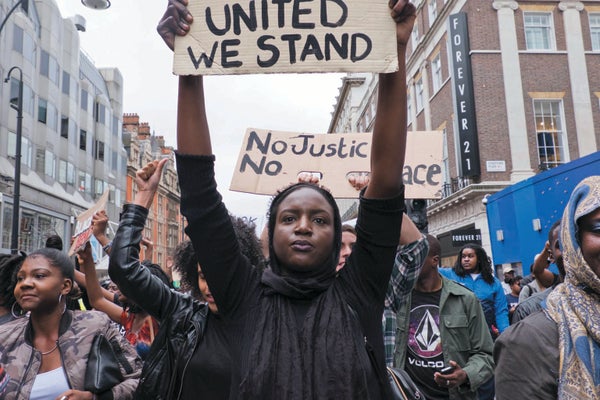
Empowering each member of society pays dividends. Diversity in workplaces encourages the search for fresh perspectives and leads to better decision-making and problem-solving. Resilience and innovation can be found in long-dismissed marginalized communities as well. Protests and campaigns by Black Lives Matter in the past two years have altered our discourse around these topics, continuing the work of the Civil Rights Movement. But we’re at risk of letting a global pandemic and growing populism stymie advances toward equality if we turn our backs on hard-won progress.
As sociologist Aldon Morris wrote in Scientific American in 2020, activists on the streets have won valuable symbolic changes—renaming buildings, streets and monuments and rallying public awareness. The work must now undo the oppressive forces built into the very makeup of our society. Never before has science had a more vital mission.