
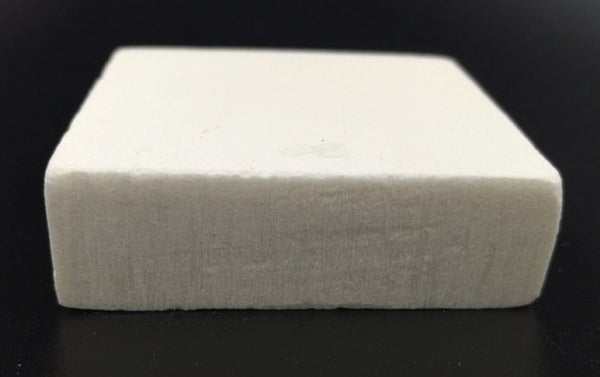
A new lightweight substance is as strong as wood yet lacks its standard vulnerabilities to fire and water.
To create the synthetic wood, scientists took a solution of polymer resin and added a pinch of chitosan, a sugar polymer derived from the shells of shrimp and crabs. They freeze-dried the solution, yielding a structure filled with tiny pores and channels supported by the chitosan. Then they heated the resin to temperatures as high as 200 degrees Celsius to cure it, forging strong chemical bonds.
The resulting material, described in August in Science Advances, is as crush-resistant as wood, says author Shu-Hong Yu, a materials chemist at the University of Science and Technology of China in Hefei. Faster freeze-drying creates even smaller channels and pores, which further strengthens the material, Yu says. And higher curing temperatures increase bonding within the resin and increase the material's strength, the team found. Adding human-made or natural fibers to the mix could also help.
On supporting science journalism
If you're enjoying this article, consider supporting our award-winning journalism by subscribing. By purchasing a subscription you are helping to ensure the future of impactful stories about the discoveries and ideas shaping our world today.
Unlike natural wood, the new material does not require years to grow. Moreover, it readily repels water—samples soaked in water and in a strong acid bath for 30 days scarcely weakened, whereas samples of balsa wood tested under similar conditions lost two thirds of their strength and 40 percent of their crush resistance. The new material was also difficult to ignite and stopped burning when it was removed from the flame.
The mock wood could be used to make ding-resistant packaging, says Lennart Bergström, a materials scientist at Stockholm University in Sweden, who was not involved in the work. Its porosity lends an air-trapping capacity that could make it suitable as an insulation for buildings, he adds. Eco-friendly alternatives to the polymer resins also could boost interest in the material.