
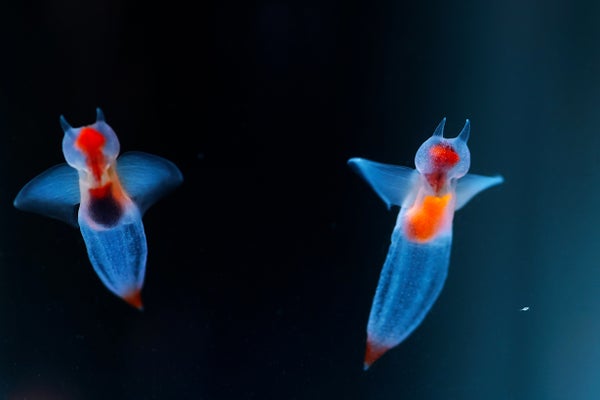
These winged water-dwellers are sea angels, floating marine slugs that may be the “canary in the coal mine” for severe ocean acidification caused by modern global warming.
Sea angels and their fluttering counterparts, sea butterflies, are pteropods. Pteropods first evolved in the early Cretaceous period, sharing the planet with dinosaurs and ammonites. The marine slugs are ancient and remarkably resilient; they have survived periods of major global extinctions and environmental changes, according to a study published in October 2020 in the journal Proceedings of the National Academy of Sciences. In addition, they are the only living creature of their kind with a solid fossil record, so they are uniquely situated to help researchers determine the effects of global change on the marine environment.
Modern global warming is rapidly accelerating and creating new challenges for these creatures. As higher concentrations of carbon dioxide build up in the ocean and the waters acidify, greater damage is occurring to marine ecosystems, including the reduction of biodiversity in coral reefs and the hampering of animals’ metabolisms. Changes to the current health of marine creatures like pteropods indicate the growing instability of their oceanic environment.
On supporting science journalism
If you're enjoying this article, consider supporting our award-winning journalism by subscribing. By purchasing a subscription you are helping to ensure the future of impactful stories about the discoveries and ideas shaping our world today.
“Although our results suggest resilience of pteropods to past ocean acidification, it is unlikely that they have ever, during their entire evolutionary history, experienced global change of the magnitude and speed that we see today,” researchers wrote in their paper.
Science in Images is a new category of articles featuring photographs and videos from all the disciplines of science. Click on the button below to see the full collection.