
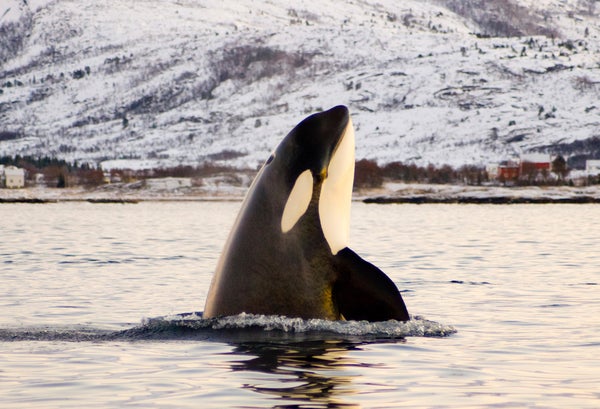
SeaWorld announced today that the theme park chain is ending its killer whale breeding program. The decision comes after ongoing criticism from animal rights activists and the increasing public disapproval of its treatment of the orcas. The park’s current batch of 29 killer whales will be the last kept in captivity.
Although SeaWorld has been under fire for decades since the Humane Society of the United States launched a campaign to end captive marine mammal shows, criticism of the park reached a peak with the 2013 documentary Blackfish, which focused on the park’s mistreatment of the orcas and the threats the marine mammals posed to their trainers. SeaWorld’s announcement comes after California Coastal Commission‘s October statement that the park would no longer be permitted to breed the animals in captivity as well as the November Orca Responsibility and Care Advancement (ORCA) Act, which sought to ban the use of orcas for public display.
In response to criticism, SeaWorld has emphasized its marine mammal research and wild animal rescue and rehabilitation programs. SeaWorld argued that captive killer whales benefit researchers because they are an easy-to-access population for controlled research, which would not be possible with hard-to-track wild orcas. The park also supports a number of conservation partners, including multiple federal and state entities, such as the World Wildlife Fund, the U.S. Fish and Wildlife Service and the Florida Department of Environmental Protection. In addition, SeaWorld maintains a rescue team that, according to its Web site, has helped more than 27,000 animals that were orphaned, ill, injured or in need of some kind of care. Although the goal for these rescued animals is rehabilitation and reintroduction to the wild, animals that cannot be returned to nature are kept in captivity, either at one of SeaWorld’s 12 parks or at other approved marine life facilities such as aquariums.
On supporting science journalism
If you're enjoying this article, consider supporting our award-winning journalism by subscribing. By purchasing a subscription you are helping to ensure the future of impactful stories about the discoveries and ideas shaping our world today.
Killer whales have been bred at SeaWorld since 1985; 23 of the park’s killer whales were born in captivity, with the most recent born in 2014. The park plans to replace its centerpiece killer whale theatrical shows with displays focused on marine conservation that evoke killer whales’ natural habitats more closely. The new facilities, which are part of the Blue World Project, will have visitors observe the whales in large tanks with oceanlike currents, varying depths and shallow beach areas along its edge. The Humane Society, a previous critic, is collaborating with the park on its new policies. Despite calls from activists to release the remaining orcas into the wild, SeaWorld reps have indicated that none of the currently captive whales will be set free—doing so would likely result in their deaths.