
Every winter deep snow smothers the boreal forests and brushy tundra within Alaska’s Denali National Park and Preserve. When it gets so cold that motor oil thickens and snow mobiles can’t start, rangers turn to an age-old solution to get around: sled dogs.
Sled dogs have been an essential part of daily operations at Denali for more than 100 years. The dogs provide rangers with a reliable way to etch trails, haul supplies and even assist park scientists with snow-dependent research. Rangers train a new litter for these tasks almost every year, adding to the team of more than 30 sled dogs serving the Denali area. The newest litter of sled dog puppies has just arrived, and you can follow their progress toward growing into full-fledged canine rangers via a live puppy cam.
On supporting science journalism
If you're enjoying this article, consider supporting our award-winning journalism by subscribing. By purchasing a subscription you are helping to ensure the future of impactful stories about the discoveries and ideas shaping our world today.
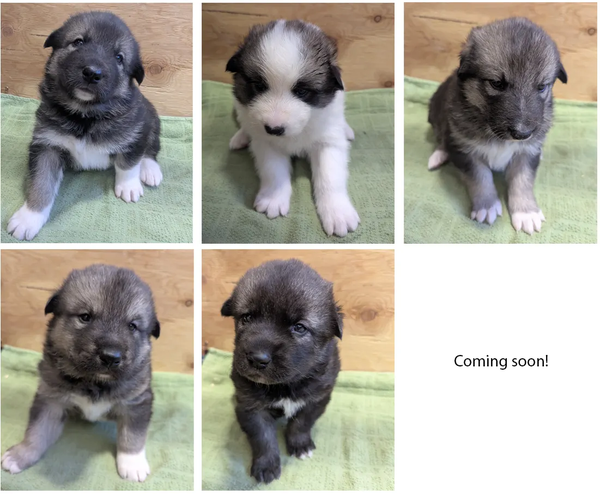
Born on March 30, the five puppies—Sequoia, Mammoth, Rainier, Teton and Mesa—are housed in the Denali kennel and were named after U.S. National Parks in honor of the 250th anniversary of the country’s independence. The puppies have been growing by more than a pound per week since their birth and, at just six weeks old, they are already very vocal, full of personality and well on their way to honing the innate abilities that help make them excellent canine rangers.
“It’s ingrained in this breed of dogs to want to want to pull, to run and to explore,” says David Tomeo, the park’s kennels manager. “We have quite the training program for our dogs to help them build confidence [in those skills] as well.”
Arctic dogs have been evolving alongside humans for millennia. The earliest direct evidence of humans using dogs to pull sleds comes from 9,000-year-old remains of two dogs found in the Eastern Siberian Arctic. Genetic evidence suggests those dogs’ lineages might go back even further—at least to the end of the Late Pleistocene period, approximately 12,000 years ago.
Today’s sled dogs are genetically very similar to the ancient canines that helped guide ice age humans through the snow. This means that modern sled dogs’ DNA “gives a window to kind of look into not only dog history but human history,” says Tracy Smith, an evolutionary geneticist, who runs the Diversity, Origins, and Genomic Studies of Dogs (DOGS) Lab at the University of Maryland, Baltimore County. “It can tell us about how these dogs migrated with humans across the Arctic landscape.”
The dogs’ largely unchanged genetic profile also means they’ve retained several key traits through the ages. Sled dog breeds—such as huskies and malamutes—have oval-shaped feet that act as snowshoes, durable joints, a thick double coat and a digestive system that can easily metabolize fatty Arctic meats such as seal or walrus. These physical features, combined with an innate love of running and pulling, make the dogs ideal for the job.
“They have a very strong drive to move forward right from the moment they’re born,” says Sean Williams, founder of the Alaska Mushing School, which trains sled dogs. “You just have to set them up for what you want them to do and give them positive reinforcement when it happens. So you pet all the youngest dogs that are just learning and tell them they did a great job.”
Unlike other dog breeds specialized for companionship or domestic tasks, working sled dogs “have been shaped by nature in one of the harshest environments on Earth,” Smith says. By continuing to provide the dogs with the sledding tasks they are suited to, she says, mushers—the people who drive dog-drawn sleds—help to preserve the animals’ work ethic and place in the Arctic’s cultural heritage.
The new batch of Denali puppies won’t be big enough to learn to pull a sled anytime soon, but rangers are already exposing them to the sights, sounds and obstacles they might encounter throughout their career traversing their snowy homeland.
“We tickle their toes; we hold them on their backs; we might lightly blow in their faces—we’re getting them used to these strange new things,” Tomeo says. “Now our pups are going out on little walks. They’re not going very far yet, but it helps to build their confidence.”