On supporting science journalism
If you're enjoying this article, consider supporting our award-winning journalism by subscribing. By purchasing a subscription you are helping to ensure the future of impactful stories about the discoveries and ideas shaping our world today.
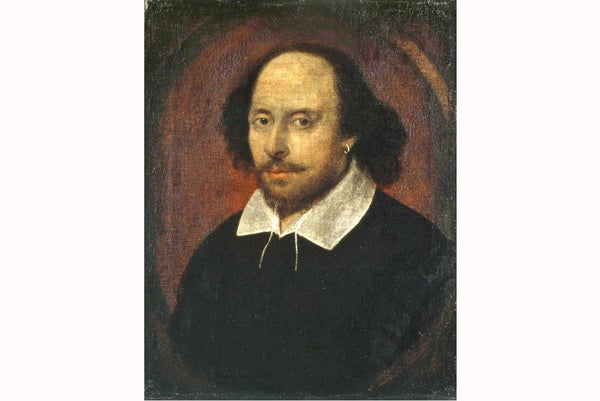
William Shakespeare's famed plays and sonnets may have been written under the influence, according to new research. In the current issue of the South African Journal of Science, Francis Thackeray of the Transvaal Museum in Pretoria and his colleagues document the presence of cocaine and myristic acid (a plant-derived hallucinogen) in clay-pipe fragments retrieved from the beloved bard's Stratford-Upon-Avon home. Their analysis also hints at the presence of marijuana residues.
Though the pipe cannot be definitively linked to Shakespeare himself, it is certain that it dates to the 17th century. This fact came as a surprise to the scientists; previously, the earliest known record of cocaine in Europe dated to only 200 years ago. "There is some suggestive evidence [of drug use] in Shakespeare's own writing," Thackeray told Reuters, pointing to phrases like "noted weed" and "compounds strange" in sonnet 76. "But I think Shakespeare, who may have experimented with these substances, is saying he would rather turn away from them. I would not read it as an endorsement of drug use."
Subscribe to Support Independent Journalism
Great science journalism requires human expertise, time, effort and creativity. And it costs money. That’s why I and the journalists here at Scientific American hope you’ll join our community.
When you subscribe, you are supporting staff and freelance journalists who are passionate about telling science stories that are true, important and compelling. Our editors and reporters are often experts in their fields, which means they understand the nuances of big discoveries and can untangle the breakthroughs from the hype. With a subscription, you are also supporting rigorous fact-checking to ensure the words we publish are precise and accurate. And you’re supporting original illustrations, graphics and photos that bring you closer to an advanced laboratory, an ice sheet in Antarctica or a space mission in orbit. You’re helping us craft other types of high-quality journalism as well: Our newsletters are carefully written, edited and curated by staffers you have or will come to know and love. Our Science Quickly podcast is based on original reporting, collaboration with editors and scientists and exacting production.
Subscriptions keep this engine running so we can continue to deliver thoughtful, rigorous and independent science journalism to you. In an era of viral misinformation, this work is crucial. If you value what we do, I hope you’ll consider joining us as a subscriber