
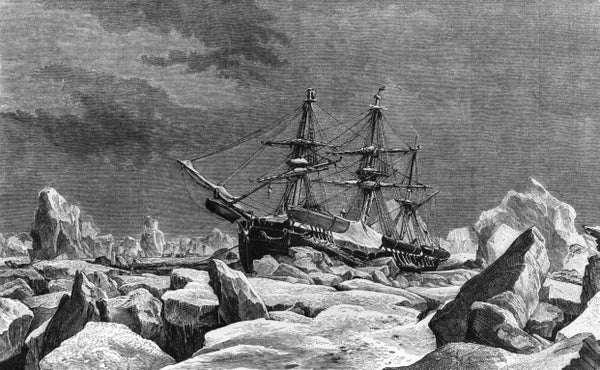
Researchers have used DNA from the skeletal remains of four members of the ill-fated 1845 Franklin expedition to explore the Arctic to identify the dead for the first time.
The expedition was a multiyear effort to find the Northwest Passage—an ice-free path connecting the Atlantic and Pacific Oceans through the Arctic. Led by British explorer John Franklin, the expedition involved two ships, the HMS Erebus and the HMS Terror. Over the course of their voyage north, both vessels became trapped in ice off King William Island in the Canadian Arctic. Franklin himself died in 1847. And in 1848 the remaining crew—105 men—decided to try to walk across the sea ice from the island to the Canadian mainland. They all perished.
“It must have been horrible,” says Douglas Stenton , an archaeologist at the University of Waterloo in Ontario. “It was probably –30 [degrees] Celsius [–22 degrees Fahrenheit], and these men were not healthy after three years in the Arctic.”
On supporting science journalism
If you're enjoying this article, consider supporting our award-winning journalism by subscribing. By purchasing a subscription you are helping to ensure the future of impactful stories about the discoveries and ideas shaping our world today.
Denton is lead author of a new study in the Journal of Archaeological Science: Reports that identifies three of the dead found on King William Island: William Orren, an able seaman; David Young, a first-class boy seaman, class, who had been 17 when he signed up for the voyage; and John Bridgens, a subordinate officers’ steward. All were from the Erebus and had joined the expedition in London.

University of Waterloo archaeologist Douglas Stenton excavates remains at Erebus Bay in 2013. This cache of bones included those of the newly identified John Bridgens.
University of Waterloo
The remains of the fourth man were found farther south, and Denton says that a forthcoming study in the journal Polar Record identifies him as Harry Peglar, who sailed on the HMS Terror. All the identifications were made by comparing the DNA extracted from the remains to that of living relatives.
Both the HMS Erebus and Terror were heavily reinforced with iron plating and were equipped with steam engines for power and extra provisions. But a note from officers of the ships’ that was found in a stone cairn stated that they became trapped in ice in late 1846 and that Franklin and 23 others had died by April 1848, when the march south was attempted by the survivors. (In 1849 Scientific American published an article about a contemplated effort to try and find the missing men. And in 1880 it published an account of a search expedition to find the remains of the then presumed deceased crew, which you can read here.)
The remains of at least 23 members of the doomed expedition have now been found, and the same researchers previously identified two of them through DNA. The latest studies bring the number of those positively identified so far to six.
“These three new identifications ... allow new insights into what happened shortly after the survivors deserted the Erebus and Terror,” the researchers write in the Journal of Archaeological Science: Reports study.