
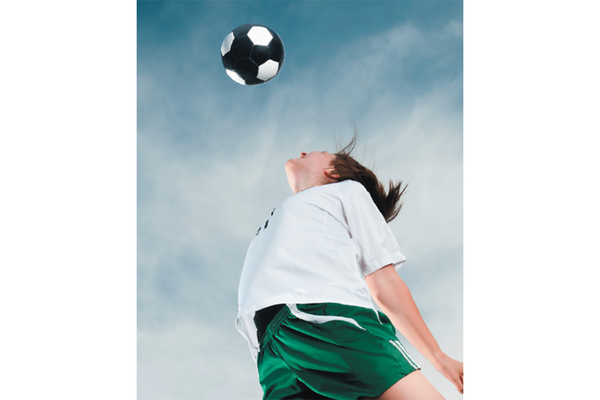
Repeatedly heading a soccer ball exacts a toll on an athlete’s brain. But this cost—measured by the volume of brain cells damaged—is five times greater for women than for men, new research suggests.
The study provides a biological explanation for why women report more severe symptoms and longer recovery times than men following brain injuries in sports. Previously some researchers had dismissed female players’ complaints because there was little physiological evidence for the disparity, says Michael Lipton, a neuroscientist at the Albert Einstein College of Medicine and a co-author of the paper.
Lipton’s team used magnetic resonance imaging to peer into the skulls of 98 adult amateur soccer players—half of them female and half male—who headed the ball with varying frequency during the prior year. For women, eight of the brain’s signal-carrying white matter regions showed structural deterioration, compared with just three such regions in men (damage increased with the number of reported headers). Furthermore, female athletes in the study suffered damage to an average of about 2,100 cubic millimeters of brain tissue, compared with an average of just 400 cubic millimeters in the male athletes.
On supporting science journalism
If you're enjoying this article, consider supporting our award-winning journalism by subscribing. By purchasing a subscription you are helping to ensure the future of impactful stories about the discoveries and ideas shaping our world today.
Lipton does not yet know the cause of these sex differences, but he notes two possibilities. Women may suffer stronger whiplash from a cranial blow because they generally have less muscle mass than men to stabilize the neck and skull. Alternatively, a dip in progesterone, a hormone that protects against swelling in the brain, could heighten women’s vulnerability to brain injury during certain phases of their menstrual cycle.
Thomas Kaminski, a sports physiologist at the University of Delaware, who was not involved in the work, calls it “truly groundbreaking.” The research is unique in highlighting the cumulative effect of repetitive knocks on the skull, as opposed to major traumatic injuries, he says. “Very few of these subjects had a history of concussion.”
Researchers are now eager to determine if these white matter changes carry long-term cognitive consequences. Until more is known, Kaminski advocates a proactive approach to limiting the damage caused by headers. In August he met with U.S. Soccer Federation officials to craft science-based guidelines for practicing the move in youth leagues.
Carla Garcia, a participant in Lipton’s study, says that after 47 years of playing soccer, she has no plans to quit using her head. But she notes, “If there’s any way we can make the sport safer for children, that’s important.”