
Lyme disease is an incredibly evasive adversary. No one is entirely sure how the bacterium that causes it spreads so widely throughout the body or why symptoms sometimes persist after the infection has been treated with antibiotics. Now researchers at the University of Toronto may finally have an explanation: The tiny, spiral-shaped bacterium called Borreliaburgdorferi can quickly grapple along the inner surfaces of blood vessels to get to vulnerable tissues or to hiding places where it can hole up beyond the reach of drugs.
B. burgdorferi uses a special adhesive protein on its surface to grab like a hook onto the endothelial cells that line blood vessels, attaching and detaching rapidly as it migrates to its destination, the Toronto microbiologists explain in a new study published Thursday in Cell Reports. “This mechanism is how the bacteria can overcome the fast flow of blood and avoid getting swept away,” says lead author Rhodaba Ebady. It is also likely that this tactic helps the pathogens get to sites where they are able to evade the immune system and treatment, Ebady says.
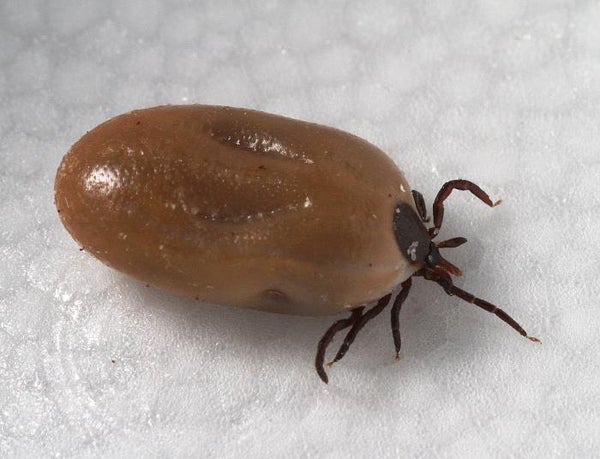
The initial infection is transmitted to humans via the bite of an infected black-legged tick (aka deer tick), which usually leaves behind a characteristic bull’s-eye rash. Symptoms can include fever, headache and fatigue. It can be treated with antibiotics if it is caught early on. But in about 20 percent of the cases severe symptoms such as joint pain and cognitive problems last even after treatment—a condition physicians call posttreatment Lyme disease. Other more chronic symptoms can be similar to those of different illnesses such as arthritis or peripheral neuropathy, and scientists disagree about whether or not they should be labeled Lyme disease.
On supporting science journalism
If you're enjoying this article, consider supporting our award-winning journalism by subscribing. By purchasing a subscription you are helping to ensure the future of impactful stories about the discoveries and ideas shaping our world today.
Very few other bacteria can bring on such a variety of symptoms or infect such hard-to-reach tissues, says Kim Lewis, a professor of microbiology and director of the Antimicrobial Discovery Center at Northeastern University. “Bacteria that cause syphilis, meningitis and leptospirosis are some examples, but they have one or two target organs,” says Lewis, who was not involved in the new study. “B. burgdorferi, however, seems to be able to sneak into all of these areas, and one of the biggest unsolved problems in Lyme disease is how it gets to all of those places.”
To observe how B.burgdorferi may travel to these tissues, Ebady and her team used human endothelial cells in the lab to re-create conditions inside blood vessels. The researchers watched through a microscope as bacteria, tagged with green fluorescent protein, moved across the cells in real time. The researchers discovered that B. burgdorferi relied on a protein called BBK32—which had previously been implicated in studies in mice—to tether themselves to the endothelial cells. BBK32 acted like an exceptionally strong bungee cord, helping the bacteria accelerate through the vessels or decelerate when they needed to get out of the bloodstream and into surrounding tissue. “Normally, when you pull on bonds they break. But this kind of ‘catch bond’ is the opposite—it strengthens with force and makes the bacteria even more firmly attached to cells in our body, kind of like if you twist two hooks together and end up locking them even tighter as you pull them,” says senior study author Tara Moriarty.
Ironically, this kind of attaching and rolling mechanism is very similar to how leukocytes—white blood cells that fight pathogens—find their way to infection and injury sites. But these beneficial cells are very different from spirochete bacteria like B.burgdorferi, both physiologically and genetically, Moriarty says. Although the same mechanism probably evolved independently in the bacteria and leukocytes, it could provide a glimpse into how other similarly resilient bacteria might move through the body and avoid detection by our immune system, she adds.
The findings also suggest that studying the structure of the BBK32 protein may help determine how bacteriatarget specific endothelial cells to hide in different tissues, Ebady notes. Eventually, she says the protein sequence and configuration information could be utilized to develop drugs that target BBK32 or its endothelial receptors, which might help prevent or slow down the spread of Lyme disease.