
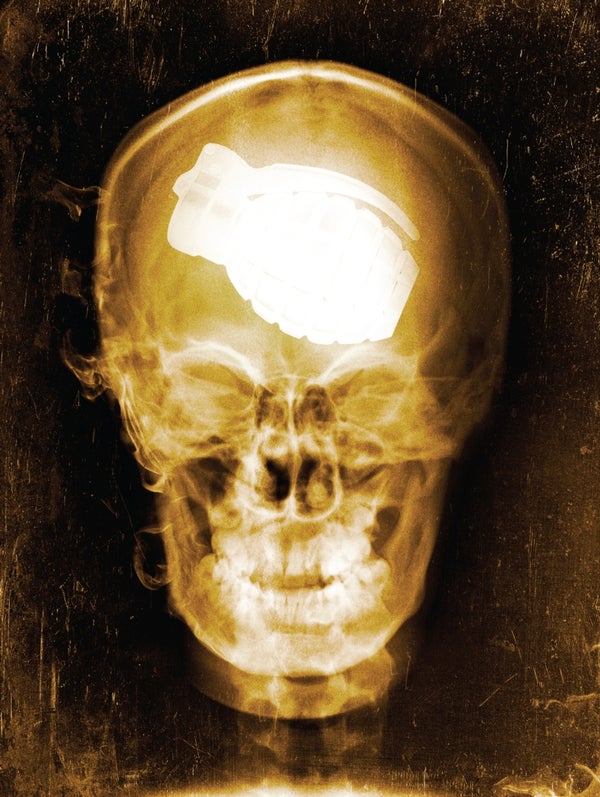
Since September 11, terrorism has been an ever present threat gnawing at our collective peace of mind. In recent years those fears—particularly of domestic attacks by Islamic extremists—have spiked. They are up by 38 percentage points since 2011 in France, 21 points in the U.K. and 17 points in the U.S., according to a survey released by the Pew Research Center last summer. And that was before Paris, San Bernardino and Brussels.
But “fear itself,” as President Franklin D. Roosevelt so famously pointed out, is not very useful. To contend with a threat, it is better to understand the forces that shape it. That is where science enters in. What can psychology tell us about the mind of a suicide bomber? What makes someone a fanatic in the first place? How is it that during the past five years, extremist groups in Syria and Iraq have managed to recruit some 30,000 foreign fighters to their cause—a number that doubled between 2014 and 2015? Can we reclaim some of them before it is too late?
The experts writing in this special report share some valuable insights from recent studies, classical research and professional experience. Social psychologists Stephen D. Reicher and S. Alexander Haslam make the case that most terrorists are not psychopaths or sadists, much as we would like to believe. Instead the majority are ordinary people, shaped by group dynamics to do harm in the name of a cause they find noble and just. Critically, those group dynamics involve all of us: our overreaction and fear, Reicher and Haslam explain, can beget greater extremism, thereby fueling a cycle other scholars have termed “co-radicalization.”
On supporting science journalism
If you're enjoying this article, consider supporting our award-winning journalism by subscribing. By purchasing a subscription you are helping to ensure the future of impactful stories about the discoveries and ideas shaping our world today.
French anthropologist Dounia Bouzar describes what she has learned from deprogramming hundreds of young people caught up in this cycle. She notes that only the tug of emotion, not reason, can pull teens back from the call to jihad. Bouzar emphasizes that parents should talk to their children about the shadow world on the Internet—a major recruitment arena in both Western Europe and the U.S.
Last but not least, social psychologists Kevin Dutton and Dominic Abrams consider how we can all help break the cycle of co-radicalization, drawing on seven key studies for concrete suggestions. Among those ideas: bridging the toxic divide of mutual distrust by celebrating broader social identities—much as President Barack Obama did so powerfully in his address to Muslim Americans at a Baltimore mosque this past February. Instead of listening to “polemical pundits and belligerent blowhards,” Dutton and Abrams write, we all need a brain check: keep calm and “tune in to the quieter, more discerning notes emanating from some of our laboratories.”
Read More
What Research Says about Defeating Terrorism Seven enlightening studies from social psychology hold vital lessons for policy makers—and the rest of us
Fueling Terror: How Extremists Are Made The psychology of group dynamics goes a long way toward explaining what drives ordinary people toward radicalism
Rescue Mission: Freeing Young Recruits from the Grip of ISIS Memories and emotions—not reason—hold the key to reclaiming young fanatics, according to an expert team in France