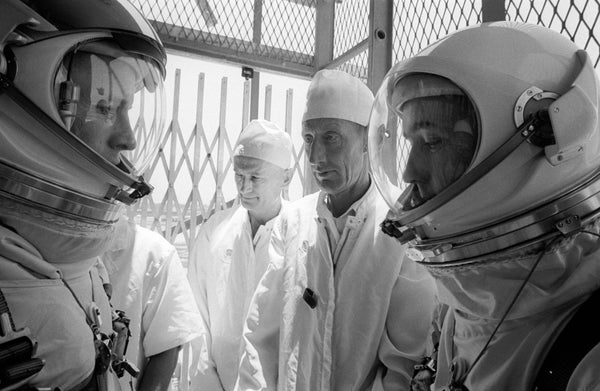
The first thing you might notice about the breathtaking new volume from German publisher TASCHEN, The NASA Archives, is the weight of the book itself. The care required to extract the 12-pound tome from its glossy case hints you might be in for a daunting experience. The subject matter is just as heavy: the triumphs, tragedies and as-yet-unrealized dreams bound up in the 60-year history of America’s voyages into space, all told via stunning photos, illustrations and firsthand accounts.
Included are the iconic, beloved snapshots from the Apollo missions, and the spectacularly detailed cosmic vistas from the Hubble Space Telescope—but it is the more rarely seen photos, concept renderings, illustrations and stories of the men and women who made these missions possible that are truly captivating. The NASA Archives brings you behind the scenes with the engineers and crew on the ground as well as into the cockpit with the astronauts who braved the unknown.
The authors behind this unique reading experience are Piers Bizony, Andrew Chaikin and Roger Launius.
On supporting science journalism
If you're enjoying this article, consider supporting our award-winning journalism by subscribing. By purchasing a subscription you are helping to ensure the future of impactful stories about the discoveries and ideas shaping our world today.
Here are a few select images from the book. Prepare to be mesmerized.
Subscribe to Support Independent Journalism
Great science journalism requires human expertise, time, effort and creativity. And it costs money. That’s why I and the journalists here at Scientific American hope you’ll join our community.
When you subscribe, you are supporting staff and freelance journalists who are passionate about telling science stories that are true, important and compelling. Our editors and reporters are often experts in their fields, which means they understand the nuances of big discoveries and can untangle the breakthroughs from the hype. With a subscription, you are also supporting rigorous fact-checking to ensure the words we publish are precise and accurate. And you’re supporting original illustrations, graphics and photos that bring you closer to an advanced laboratory, an ice sheet in Antarctica or a space mission in orbit. You’re helping us craft other types of high-quality journalism as well: Our newsletters are carefully written, edited and curated by staffers you have or will come to know and love. Our Science Quickly podcast is based on original reporting, collaboration with editors and scientists and exacting production.
Subscriptions keep this engine running so we can continue to deliver thoughtful, rigorous and independent science journalism to you. In an era of viral misinformation, this work is crucial. If you value what we do, I hope you’ll consider joining us as a subscriber