
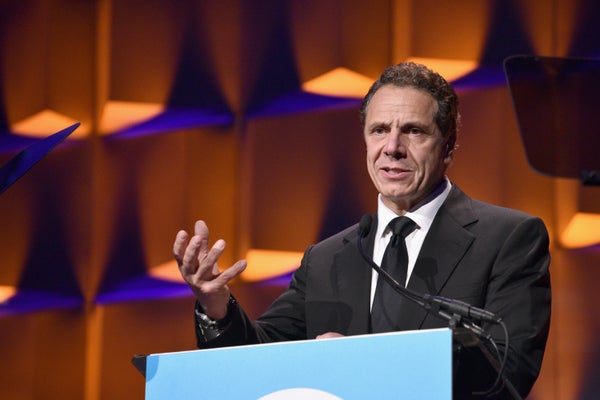
New York Gov. Andrew Cuomo (D) will reconvene a science advisory panel shut down by the Trump administration.
New York, along with other states involved in a climate policy network to counterattack the federal government's retreat on carbon regulation, will reconstitute the federal advisory committee for the Sustained National Climate Assessment. Cuomo will announce the move today during his annual State of the State speech in Albany. The committee includes academics, corporate representatives and other stakeholders.
In August, the Trump administration notified members of the advisory committee that the group was being dissolved. The panel was tasked with translating dozens of studies and scientific revelations that constitute the National Climate Assessment into policy actions that states could use to reduce greenhouse gas emissions.
On supporting science journalism
If you're enjoying this article, consider supporting our award-winning journalism by subscribing. By purchasing a subscription you are helping to ensure the future of impactful stories about the discoveries and ideas shaping our world today.
The resuscitated committee will be limited in its reach. The coalition of states can't replace federal support for science, including maintaining satellites and building better climate models, said Richard Moss, the committee's chairman and a researcher at Columbia University's Earth Institute. Previously, the committee had sway over federal climate policy. Yet he said the effort shows that states won't step away from climate policy.
"States realize that they want access to this information; they want to have a better network and a better approach for applying information from the national climate assessments to their own infrastructure and other investment needs, so this is a way for them to make the statement that they want to participate and see this move forward," Moss said. "Adaptation shouldn't be a political issue, and we want to contribute to making it that way."
Cuomo, who rarely attacks President Trump by name, is reportedly interested in a 2020 presidential run. Though he came into office as a centrist who sometimes referred to climate change as a debate, he has spent the last several years tacking to the left on a number of issues and has increasingly made environmental issues a priority.
In Cuomo's State of the State speech, the governor outlines his policy goals for the upcoming legislative session. In addition to reconvening the panel, Cuomo wants to shutter the state's last coal plants, expand the Regional Greenhouse Gas Initiative and increase the share of renewable energy on the grid.
"New Yorkers know too well the devastation caused by climate change, and in order to slow the effects of extreme weather and build our communities to be stronger and more resilient, we must make significant investments in renewable energy," Cuomo said in a statement. "With this proposal, New York is taking bold action to fight climate change and protect our environment, while supporting and growing 21st century jobs in these cutting-edge renewable industries."
Reprinted from Climatewire with permission from E&E News. E&E provides daily coverage of essential energy and environmental news at www.eenews.net.
