
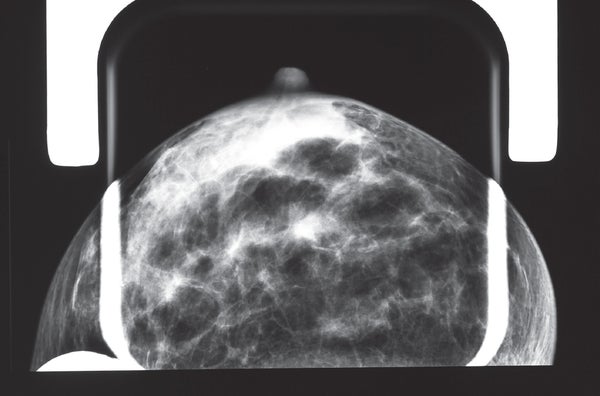
The gut microbiome has stolen the show when it comes to the recent explosion of research on the bacteria that thrive within us. But bacteria also live in a woman's breast tissue—and the mix of those microbes may have an equally important effect on health, according to a new study in Applied and Environmental Microbiology. The results “suggest that microbes in the breast, even in low amounts, may be playing a role in breast cancer—increasing the risk in some cases and decreasing the risk in other cases,” says Gregor Reid, a professor of microbiology and immunology at Western University in Ontario and the study's senior author.
One in eight women in the U.S. are diagnosed with breast cancer during their lifetimes, but its origins remain unknown in most cases. Age, genetic predisposition and environmental changes are often implicated—and according to a growing body of research, bacteria may be one of those environmental factors. For instance, as early as the 1960s a number of studies have found that breast-feeding is associated with a lower risk of breast cancer, and more recent work suggests that this may be because breast milk supports the growth of beneficial microorganisms.
Reid and his team decided to pursue this line of thought. They analyzed bacterial DNA found in breast tissue samples from 58 women who were undergoing lumpectomies or mastectomies for either benign or cancerous tumors, as well as from 23 healthy women who had undergone breast reductions or enhancements. They found that women with breast cancer had higher levels of some types of bacteria, including Enterobacteriaceae, Staphylococcus and Bacillus. Women without cancer had higher levels of other types, such as Lactococcus and Streptococcus.
On supporting science journalism
If you're enjoying this article, consider supporting our award-winning journalism by subscribing. By purchasing a subscription you are helping to ensure the future of impactful stories about the discoveries and ideas shaping our world today.
It isn't surprising in and of itself that the breast harbors microbes, says immunologist Delphine Lee, who studies breast cancer at the John Wayne Cancer Institute in Santa Monica, Calif., and was not involved in the study. “The breast is exposed to the outside environment through the nipple and ductal system. Bacteria can also get in the tissue through skin wounds and other mechanisms,” she explains. “But what we're not sure of yet is whether certain bacteria are found near breast tumors because they cause breast cancer or because they just thrive in the tumor environment.”
If certain bacteria do instigate cancer, how would they do so? Some Enterobacteriaceae and Staphylococcus microbes seem to cause DNA damage—a known route to the development of cancer. Other bacteria may trigger inflammation. The exact mechanisms must be probed in further animal studies, Reid says, but eventually he hopes researchers will be able to use a patient's bacterial makeup as a biomarker for cancer screening or to develop probiotics for improving prognosis and treatment outcomes.