
Most of us recognize that obesity is not a benign condition. Diabetes, arthritis, plus heart, liver and gallbladder diseases commonly plague folks who carry major excess poundage. Less familiar is the risk of cancer. Being overweight or obese has been linked to at least 13 types of cancer. Obesity more than doubles the risk of the most common forms of uterine and esophageal cancer. It raises the risk of tumors of the colon, gallbladder, kidney, liver, pancreas, upper stomach and brain membranes by 50 to 80 percent compared with adults at a healthy weight, and it ups the odds for multiple myeloma and cancers of the breast, ovary and thyroid.
The danger tends to rise with the number on the scale: extremely obese women, for instance, face seven times the risk of uterine cancer. Obesity also makes it more likely that certain cancers, including breast and prostate, will prove fatal or not respond optimally to treatment. Given that most cancers take decades to develop, one has to wonder what the eventual cancer toll will look like now that nearly 80 percent of American adults and a third of children are overweight or obese—up 60 percent and more than 100 percent, respectively, from 1980.
An analysis released this year by researchers at the American Cancer Society paints an alarming picture. Their study, published in the Lancet Public Health, looks at how cancer rates have changed over the past 20 years among younger adults—Americans who came of age during the steepest rise in obesity—compared with older adults. Hyuna Sung and her co-authors examined trends for the 30 most common cancers, 12 of which occur more often in overweight people. Six of those 12—colorectal, gallbladder, kidney, multiple myeloma, pancreatic and uterine—were found to be rising more rapidly in younger Americans (ages 25 to 49). The sharpest jumps—between 2 and 6 percent annually—were in the youngest adults (ages 25 to 35). “This is not negligible,” Sung says. “It’s a huge and very fast increase.”
On supporting science journalism
If you're enjoying this article, consider supporting our award-winning journalism by subscribing. By purchasing a subscription you are helping to ensure the future of impactful stories about the discoveries and ideas shaping our world today.
Trends in young adults can be seen as a “bellwether for future disease burden,” Sung notes. She also points to growing evidence that obesity that starts in childhood or adolescence may present a particular risk for some cancers. That said, Sung’s study does not address causality and therefore does not prove that the uptick in certain malignancies is a direct consequence of rising obesity.
Other investigators, however, are looking directly at how obesity might promote cancer. Turns out, excess body fat impacts the body in multiple ways that may aid and abet a developing tumor. “The whole hormonal milieu changes dramatically with obesity,” says Stephen Hursting, professor of nutrition at the University of North Carolina’s Lineberger Comprehensive Cancer Center. The first “big basket” of changes includes a rise in growth factors, including insulin and those that promote blood vessel formation, he explains. A second big basket involves substances that promote inflammation. “The obese state is a kind of smoldering, low but insistent inflammatory state,” Hursting says. A third alteration is suppression of the immune responses that fight incipient cancers. And there are other impacts, including obesity-related changes to the microbiome, metabolism and gene expression. Reading Hursting’s 2018 review of the many mechanisms linking obesity with cancer was one of the more disturbing things I’ve done as a health reporter. It made me want to scream at the big food industry, which has done so much to engineer our obesity epidemic.
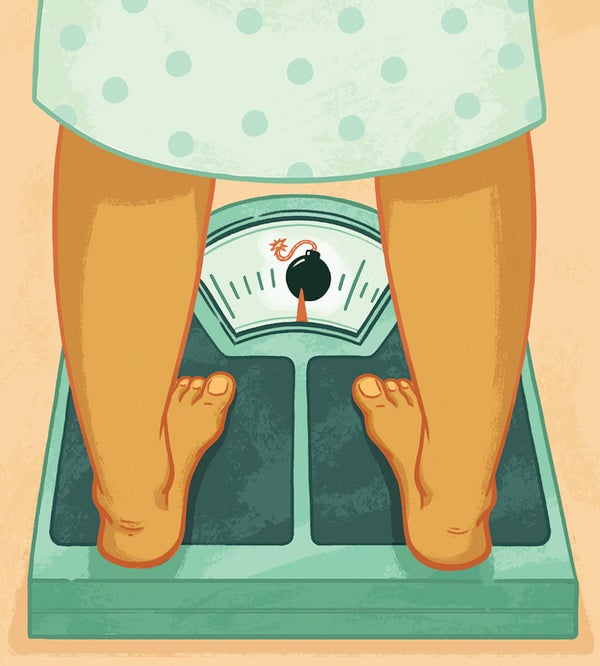
Screaming is of little use, so the question is: How can we defuse this time bomb? Clues come from studies of patients who have slimmed down after bariatric surgery and trimmed their cancer rate as well. A study with 88,625 obese women found, for example, that those who underwent such operations had a 50 percent lower rate of postmenopausal breast cancer than those who did not. Newer data suggest the surgery may also lower the risk of virulent “triple-negative” breast cancer in younger obese women.
Whether less drastic measures will do the trick is a hot research topic. At the Dana-Farber Cancer Institute, oncologist Jennifer Ligibel is leading a randomized, controlled trial with 3,136 obese breast cancer patients to see if losing just 7 to 10 percent of their body mass with diet and exercise will lower their risk of cancer recurrence and mortality. That level of weight loss has a big benefit for people with type 2 diabetes, she notes. Results will not be out for a few years, but Ligibel is hopeful: “Wouldn’t it be great if we could find a treatment for breast cancer where the side effects are that you have less arthritis and diabetes and you feel better?”