
Poached: Inside the Dark World of Wildlife Trafficking
by Rachel Love Nuwer.
Da Capo Press, 2018 ($28).
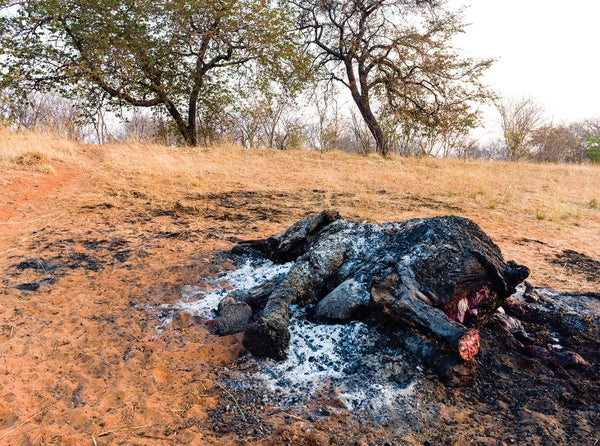
From the swampy wilderness of southern Vietnam, where hunters pursue threatened pangolins, to a bustling wholesale traditional medicine market in Guangzhou, China, where the pinecone-resembling mammal’s scales are sold, journalist Nuwer brings the reader along on her globe-trotting mission to understand the complex, thriving world of the illegal wildlife trade. She interviews hunters who capture endangered species, practitioners of Chinese traditional medicine who ingest rhino horn powder for unproved benefits and the conservationists trying to stem the slaughter of dozens of dwindling species. Forces such as entrenched poverty and corruption prevent easy solutions to the wildlife trafficking, especially given the limited resources of local governments and existing reserves. While the accounts can be gut-wrenching, Nuwer finds rays of hope in the park rangers and other conservation experts who are dedicating their lives to saving some of the earth’s most majestic creatures. —Andrea Thompson
On the Future: Prospects for Humanity
by Martin Rees.
Princeton University Press, 2018 ($18.95).
On supporting science journalism
If you're enjoying this article, consider supporting our award-winning journalism by subscribing. By purchasing a subscription you are helping to ensure the future of impactful stories about the discoveries and ideas shaping our world today.
Powerful new technologies—from gene editing to geoengineering—are poised to remake life as we know it. These innovations could prove fruitful or damaging, depending on how we deploy them. Astrophysicist Rees neatly packages his sprawling subject matter into a guidebook for the responsible use of science to build a healthy and equitable future for humanity. He ponders the prospects of long-term palliative care: Should doctors use technology to keep vegetative patients alive indefinitely? And should “objective” artificially intelligent computers recommend surgeries or launch bombs instead of biased humans? Such questions constitute Rees’s spirited assessment of technology’s role in shaping our future—whether constructive or catastrophic. —Daniel Ackerman
The Poison Squad: One Chemist’s Single-Minded Crusade for Food Safety at the Turn of the Twentieth Century
by Deborah Blum.
Penguin Press, 2018 ($28)
Milk whitened with chalk. Peas made greener with copper. Chemicals added to meat to prolong a pinkish, fresh hue. In the late 1800s U.S. food manufacturers took these liberties, along with dozens more, to trim costs. Journalist Blum chronicles the efforts of one chemist to fight back against these dangerous practices. Her subject, Harvey Washington Wiley, was an outspoken political actor, who sparred with the likes of Theodore Roosevelt in an effort to regulate the industry. Blum draws from her meticulous research to re-create the battle between regulation in the name of consumer protection and production in the name of profits. —Maya Miller
Laika’s Window: The Legacy of a Soviet Space Dog
by Kurt Caswell.
Trinity University Press, 2018 ($24.95).
In 1957 the Soviet Union sent its second satellite into orbit around Earth, this one carrying a dog named Laika. Sputnik 2 made 2,570 revolutions over five months before its fiery reentry in our planet’s atmosphere. Laika did not survive her journey— an outcome the space agency anticipated. Writer Caswell profiles the program that trained dozens of such “space dogs” as test subjects for early missions. Plucked from the streets of Moscow, Laika endured extreme gravitational forces, vibration and long periods of isolation. She was the first animal to orbit Earth. The program was a “tipping point” for space exploration, Caswell writes, but Laika’s treatment was undeniably cruel. The book is meant as a testament to her experience.