
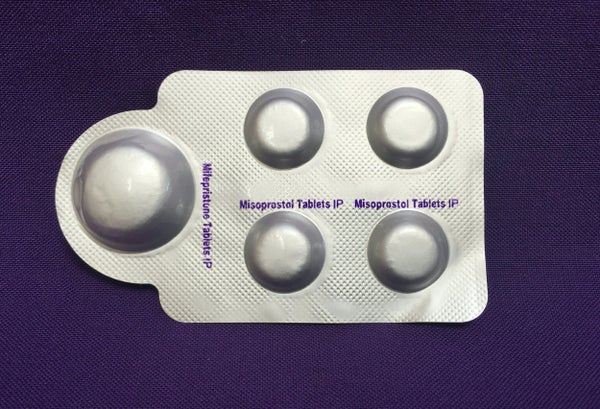
The pandemic has shown us that it’s time to change the way we get health care and that essential health care, including abortion, has always been out of reach for far too many. As we look ahead to the future of care, the science is clear: medication abortion care is safe and effective, and it’s past time to remove the restrictions on it. Now, actions from the FDA and new research show us that removing the restrictions on medication abortion care has the potential to expand access for many people who need care. The July 2021 special issue of the journal Contraception focuses on the restrictions on medication abortion, mifepristone, including its impacts on safety and efficacy, access to abortion, and burdens on patients and providers.
Mifepristone is regulated by a Risk Evaluation and Mitigation Strategy (REMS). REMS programs are rare and intended for drugs with a risk of very serious side effects. The mifepristone REMS includes three “Elements to Assure Safe Use”: mifepristone must be dispensed from a clinic, medical office or hospital (not a retail pharmacy); providers must register as certified prescribers; and patients must sign a patient agreement in addition to standard informed-consent forms. Together, these restrictions create a sense that mifepristone is dangerous for patients to use and overly complicated for health care providers to offer.
Massive quantities of data collected during the first 20 years of mifepristone’s use in the U.S. demonstrate that it is highly effective and exceedingly safe. Prior to 2020, opponents of loosening regulations on mifepristone could argue that mifepristone was safe for the nearly four million individuals who had used it in the U.S. because of the regulations. However, experience during the COVID-19 pandemic demonstrates that restrictions are not what make mifepristone safe.
On supporting science journalism
If you're enjoying this article, consider supporting our award-winning journalism by subscribing. By purchasing a subscription you are helping to ensure the future of impactful stories about the discoveries and ideas shaping our world today.
During much of the pandemic, the in-person dispensing requirement for mifepristone was lifted in order to limit face-to-face contact. This meant that providers could send mifepristone through the mail to their patients following a telehealth evaluation. Patients received the counseling and care they needed, health care providers collected the necessary information to determine if mifepristone was an appropriate option, and both avoided the risk of contracting COVID-19. This change provided an opportunity to study how removing this requirement affected—or did not affect—the safety and efficacy of medication abortion care.
Twoarticles in the Contraception special issue describe medication abortion care in the U.S. provided through different protocols, including a telehealth visit followed by mailed medications; both find that these models of care are safe (less than 1 percent of patients experienced a serious complication) and effective (about 95 percent had a successful abortion without a follow-up procedure). Studies from the U.K. (52,142 patients in England and Wales and 663 patients in Scotland) reinforce that provision of medication abortion care via telehealth and mailed medications is safe, effective and highly acceptable to patients. Taken together, these recent studies reflect findings from the pre-COVID-19 era, reinforcing what we already knew: mifepristone is safe and effective, regardless of how and where it is dispensed.
Medically unnecessary restrictions impact health care providers’ ability to offer medication abortion care. A survey found that 24 percent of obstetrician-gynecologists not currently providing medication abortion care would do so if the in-person dispensing requirement were removed, potentially more than doubling the number of providers in the Southeast and Midwest, where abortion access is highly restricted. Many patients would prefer to receive abortion care from their primary care provider with whom they have a long-term relationship, but the REMS stands in the way.
Although medication abortion care is well within the scope of primary care, the REMS contributes to stigma and barriers at the individual and institutional level. Logistical challenges presented by the REMS (including the in-person dispensing requirement) and resistance from institutional decision-makers result in barriers for providers and unnecessary burdens for patients. Removing the REMS and allowing pharmacy dispensing of mifepristone could help normalize medication abortion care, facilitate provision in primary care and address disparities in abortion access.
Patients’ reasons for choosing telemedicine abortion with mailed medications highlight why this option is vitally important: patients describe the importance of privacy, protection from stigma, avoiding unnecessary contacts (particularly important during COVID) and travel. In an interview study of 45 patients in Hawaii, 13 percent said that they would have had to continue the pregnancy without the telehealth–mailed medication option. The ability to receive abortion care through telehealth is extremely important for improving access: providers can reach geographically distant patients, and one provider can serve an entire state without patients needing to find time, childcare and funds to travel.
With every passing year since the approval of mifepristone in 2000, research documenting its safety and efficacy grows, and each study reinforces and builds upon the last. We have more than enough high-quality data to support reconsidering how mifepristone is regulated and to remove the REMS. Doing so will not be a panacea for abortion access, given the complex web of abortion restrictions that many states impose, but it’s a necessary step towards bringing medication abortion care into line with the science. It’s time.
This is an opinion and analysis article; the views expressed by the author or authors are not necessarily those of Scientific American.