The Glimmer of a Silver Lining
Traumatic events such as pandemics can spur transformative psychological growth
By Andrea Gawrylewski
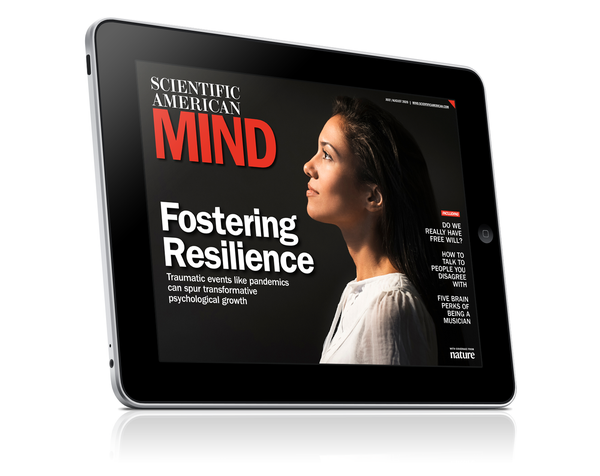
Months of pandemic lockdowns, an economic crisis and necessary social upheaval are taxing each and every one of us. As Wired writer Matt Simon outlined in an article in early June, our bodies are programmed to deal with short spurts of stress. Longer hauls of strain amp up levels of the hormones cortisol and adrenaline and lead to a host of problems from anxiety to insomnia and—in the extreme—even Cushing’s syndrome. But we don’t have to stress out over the stress. Author and psychologist Steve Taylor writes in this issue that experiencing trauma and turmoil can lead to positive effects in some people. So-called post-traumatic growth leads nearly half of those who experience intensely stressful events to later find a new, more positive perspective on life. This transformation often includes a stark recognition of what truly matters and of what brings a sense of meaning to your existence. Despite their past hardships, those who report these positive effects feel that they end up in a better mental place than before their ordeal (see “The Coronavirus and Post-traumatic Growth”).
Elsewhere in this issue, our Beautiful Minds columnist Scott Barry Kaufman talks with philosopher and professor Robyn Repko Waller about the scientific study of human free will (see “The Neuroscience of Free Will”). And researchers at Harvard University reveal how particular language strategies can improve conversations between individuals and groups that disagree with one another (see “The Right Way to Talk across Divides”). What a welcome outcome that would be.
Subscribe to Support Independent Journalism
Great science journalism requires human expertise, time, effort and creativity. And it costs money. That’s why I and the journalists here at Scientific American hope you’ll join our community.
When you subscribe, you are supporting staff and freelance journalists who are passionate about telling science stories that are true, important and compelling. Our editors and reporters are often experts in their fields, which means they understand the nuances of big discoveries and can untangle the breakthroughs from the hype. With a subscription, you are also supporting rigorous fact-checking to ensure the words we publish are precise and accurate. And you’re supporting original illustrations, graphics and photos that bring you closer to an advanced laboratory, an ice sheet in Antarctica or a space mission in orbit. You’re helping us craft other types of high-quality journalism as well: Our newsletters are carefully written, edited and curated by staffers you have or will come to know and love. Our Science Quickly podcast is based on original reporting, collaboration with editors and scientists and exacting production.
Subscriptions keep this engine running so we can continue to deliver thoughtful, rigorous and independent science journalism to you. In an era of viral misinformation, this work is crucial. If you value what we do, I hope you’ll consider joining us as a subscriber