
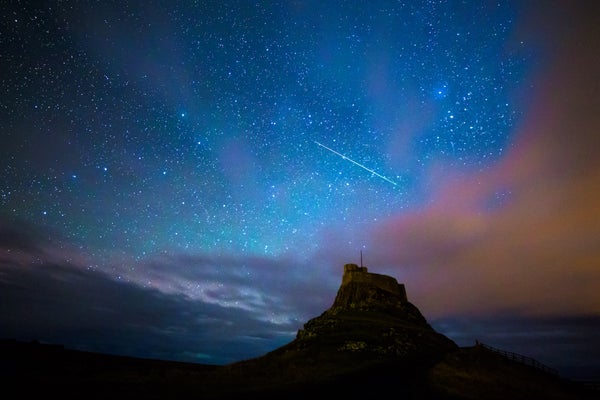
Sky watchers, get your gloves on: the final meteor shower of 2025, the Ursids, will peak this weekend.
The Ursids are often outshone by the Geminids, which are frequently the most spectacular meteor shower of the year and peaked last weekend. That’s because the Ursid meteor shower is typically sparser—offering around five to 10 meteors per hour—so catching it at its peak is important. This year the peak of the Ursid shower will begin on the evening of December 21 and continue through the predawn hours of December 22.
Meteor showers are named for the constellation from which they appear to emanate. In the Ursids’ case, that is Ursa Minor, otherwise known as the Little Dipper. Specifically, the meteors appear to radiate from a bright orange star called Kochab, which is one of two stars the make up the outer edge of the Little Dipper’s bowl.
On supporting science journalism
If you're enjoying this article, consider supporting our award-winning journalism by subscribing. By purchasing a subscription you are helping to ensure the future of impactful stories about the discoveries and ideas shaping our world today.
To try to see the Ursids, go somewhere with a dark sky and be prepared wait—your eyes will need about 30 minutes to adjust to the light. Then locate Ursa Minor to orient yourself. Move your eyes across the sky—meteors will appear to radiate out from the constellation, but they will not be confined to it. Because of Kochab’s location near the North Pole, it and the Ursids will be visible to most people in the Northern Hemisphere all night long.
Conveniently, the new moon will fall on December 20, and the winter solstice will occur the next day. The new moon means that the skies will be quite dark for the Ursid display. And the solstice will mark the beginning of astronomical winter and the longest night of the year in the Northern Hemisphere.