
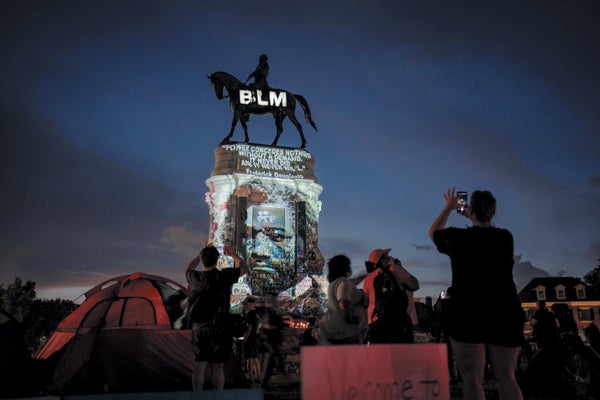
In 2020, as the bodies piled up during the pandemic, it became clear that people of color were dying at far higher rates than white people. They had the jobs that exposed them to infections, the comorbidities that made them more likely to get very sick, and less ability to access quality health care than white Americans. The toll revealed in very stark ways that racial disparities and racism were alive and well in the U.S.
At the same time, police were attacking Black people, and those attacks were being disseminated far and wide via new visual technologies. Just as COVID laid bare the racial disparities, the murder of George Floyd unfolded in front of millions of eyes in a way that made racial oppression undeniable. Not only was the structural racism in American society displayed in all its hideousness, but people were dissecting and debating it across social media in a way that had never been possible before.
For social justice movements to erupt, you need a diagnosis of the problem. No matter how much suffering there is, oppression, inequality and injustice can be thought of as natural. The Bible says, for example, that the poor will always be among us. Some people see it that way—it is just fate. Or defective genes or culture. A real diagnosis was finally on the table, being discussed not only by a few scholars and activists but by Americans at large.
On supporting science journalism
If you're enjoying this article, consider supporting our award-winning journalism by subscribing. By purchasing a subscription you are helping to ensure the future of impactful stories about the discoveries and ideas shaping our world today.
Understanding the depth of the injustice made people angry, and they came out in the streets in unprecedented numbers. In this manner, the pandemic dovetailed with police oppression and technology to energize the Black Lives Matter (BLM) movement. In addition, COVID nearly shut down the economy, giving many more people opportunities to protest. During the Civil Rights Movement (CRM), college students were especially available for sit-ins and other protests on so-called T-days—Tuesdays and Thursdays—when they had no classes. But at the height of the pandemic, far more people had the time to join the BLM and other protests. And there was another breakthrough: for the first time in American history, people of diverse classes, races and ethnicities joined a movement against racial oppression.
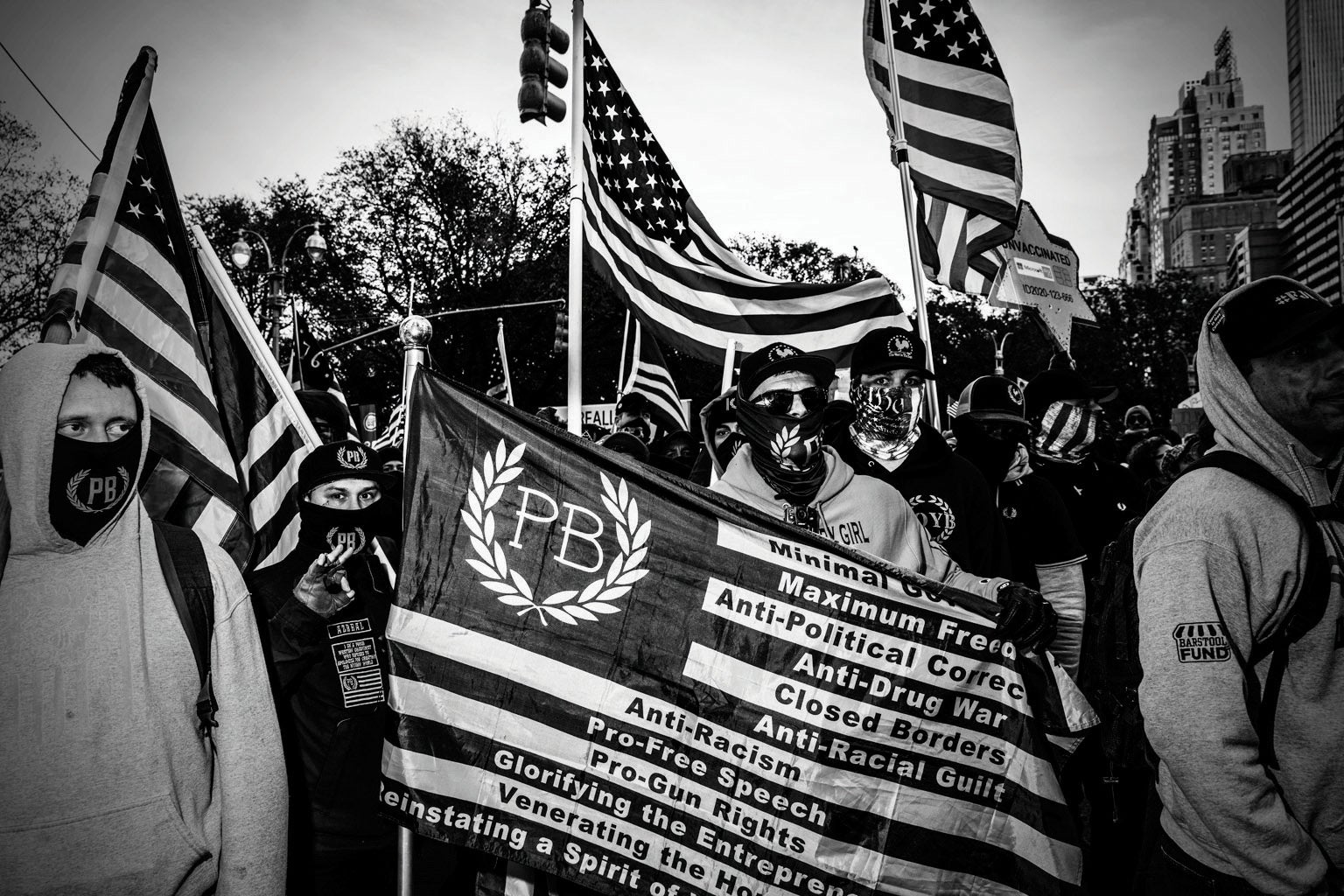
Far-right protesters, including members of the Proud Boys, a neofascist group, marched against COVID vaccine mandates in Manhattan last November. More than two dozen Proud Boys members have been indicted in connection with the attack on the U.S. Capitol on January 6, 2021. Credit: Mark Peterson/Redux Pictures
These protests led to important gains. For the first time, there is serious public deliberation on the disparities in health, schooling, access to universities and wealth that persist along racial lines. The police are more aware of the possibility of being held accountable. And a debate over reparations for slavery has sprung up—something hitherto unthinkable. More broadly, the intersection of the pandemic, police brutality and modern technology has spurred a very vibrant progressive movement in the country and the world.
How lasting the gains will be is far from clear. Worryingly, the massive social justice movements energized countermovements that are determined to halt any progressive changes to American society. The political right has gathered new strength, to the extent that it threatens to set us back to an era before the CRM. Among that movement’s great achievements are the 1964 Civil Rights Act and the 1965 Voting Rights Act. What is under attack now? It is precisely the right to vote. Multiple states now have laws that restrict the rights of so-called minority voters, meaning voters of color.
The Kyle Rittenhouse case, in which a vigilante who shot white people participating in largely Black protests in 2020 was completely exonerated, is also alarming. In the 1960s segregationists attacked white participants in the CRM, describing them as race traitors. Rittenhouse’s assault has similar overtones. Now white people know that not only can conservatives attack them if they participate in protests, but the courts may also side with the attackers. Going forward, will they be willing to risk their lives for a cause that is not directly theirs? And how can we ignore the insurrection of January 6, 2021, when a predominantly white armed mob sought to annul the outcome of the presidential election?
As I see it, a very serious clash is taking place between progressive and conservative forces, between people who are fighting for equality and people who are fighting to maintain the status quo. It is not clear who will triumph. What is clear is that America is at its highest level of polarization in modern history. I can imagine it must have looked something like this prior to the Civil War. We are at a cusp, and we could fall on either side—into the chasm of fascism or into a more hopeful, democratic world.