The Pandemic Showed the Promise of Cities with Fewer Cars

Residents learned what was possible. Some politicians fought to keep it that way

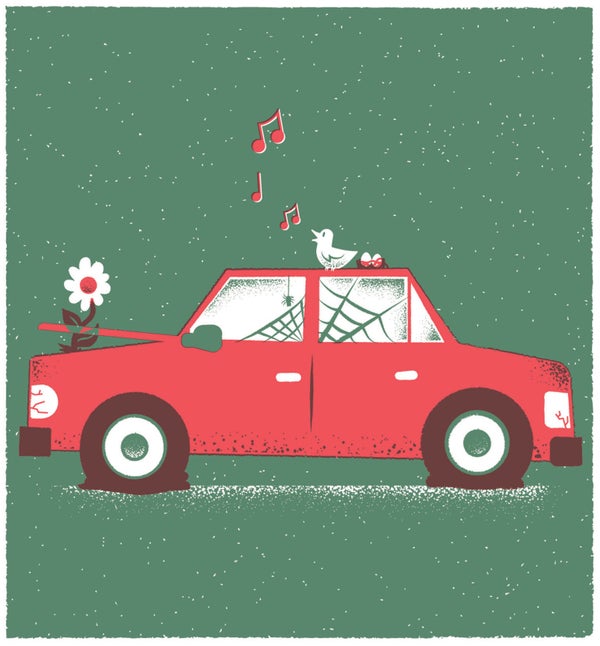
Red car.

James Olstein

Join Our Community of Science Lovers!


On supporting science journalism

If you're enjoying this article, consider supporting our award-winning journalism by subscribing. By purchasing a subscription you are helping to ensure the future of impactful stories about the discoveries and ideas shaping our world today.


During COVID’s first wave, the streets of New York and other major cities became eerily empty. Mournful sirens replaced the usual bustle and din. But urban dwellers also heard something new: an abundance of birdsong. During walks outside—the only safe respite beyond their apartments—they breathed cleaner air. Lockdowns had meant fewer cars on the roads, and the effects were unmissable. Levels of nitrogen dioxide—a by-product of fossil fuels burned in cars and in electricity generation—were 30 percent lower along the I-95 corridor from Washington, D.C., to Boston in March 2020 compared with previous years. Come summer, people sat at outdoor extensions of restaurants built in parking zones and moved around on newly added bike lanes. These incidental adaptations to the pandemic allowed residents to experience the benefits of shifting away from the “car is king” status quo in a way that policy proposals for climate-friendly infrastructure never could, explains Christian Brand, an environmental scientist with the Transport Studies Unit at the University of Oxford. Now, he says, “they know what’s possible.”

Some fought to keep it that way. Paris has been a leader of this sustainability shift nudged along by the pandemic. The French capital already had plans to tamp down car use and encourage cycling before COVID emerged, but in late spring 2020 some 50 kilometers of pop-up bike lanes, called coronapistes, were added literally overnight. They are now a permanent part of Paris’s cycling network, with more in the works.

These strides, Brand says, came in no small part because of political will. Paris Mayor Anne Hidalgo made climate change a focus of her reelection campaign. Besides providing subsidies for purchasing and repairing bicycles, she emphasized the health benefits of reducing car emissions, calling pollutants and a contagious respiratory virus “a dangerous cocktail.” In other cities, like New York, changes were more modest or temporary. Shutdowns may have revealed the possibility of safer, healthier streets—but it was often a fleeting vision.

Andrea Thompson is senior desk editor for life science at Scientific American, covering the environment, energy and earth sciences. She has been covering these issues for nearly two decades. Prior to joining Scientific American, she was a senior writer covering climate science at Climate Central and a reporter and editor at Live Science, where she primarily covered earth science and the environment. She has moderated panels, including as part of the United Nations Sustainable Development Media Zone, and appeared in radio and television interviews on major networks. She holds a graduate degree in science, health and environmental reporting from New York University, as well as a B.S. and an M.S. in atmospheric chemistry from the Georgia Institute of Technology. Follow Thompson on Bluesky @andreatweather.bsky.social

More by Andrea Thompson
Scientific American Magazine Vol 326 Issue 3This article was published with the title “Lockdowns Showed the Promise of Cities with Fewer Cars” in Scientific American Magazine Vol. 326 No. 3 (), p. 51
doi:10.1038/scientificamerican0322-51

It’s Time to Stand Up for Science

If you enjoyed this article, I’d like to ask for your support. Scientific American has served as an advocate for science and industry for 180 years, and right now may be the most critical moment in that two-century history.

I’ve been a Scientific American subscriber since I was 12 years old, and it helped shape the way I look at the world. SciAm always educates and delights me, and inspires a sense of awe for our vast, beautiful universe. I hope it does that for you, too.

If you subscribe to Scientific American, you help ensure that our coverage is centered on meaningful research and discovery; that we have the resources to report on the decisions that threaten labs across the U.S.; and that we support both budding and working scientists at a time when the value of science itself too often goes unrecognized.

In return, you get essential news, captivating podcasts, brilliant infographics, can't-miss newsletters, must-watch videos, challenging games, and the science world's best writing and reporting. You can even gift someone a subscription.

There has never been a more important time for us to stand up and show why science matters. I hope you’ll support us in that mission.

Thank you,

David M. Ewalt, Editor in Chief, Scientific American

Subscribe