The Perks of Being Outdoors Backed Up By Science

The cover story of our latest issue of Scientific American Health & Medicine explores this sweeping new study

Chris Gash

Join Our Community of Science Lovers!


On supporting science journalism

If you're enjoying this article, consider supporting our award-winning journalism by subscribing. By purchasing a subscription you are helping to ensure the future of impactful stories about the discoveries and ideas shaping our world today.


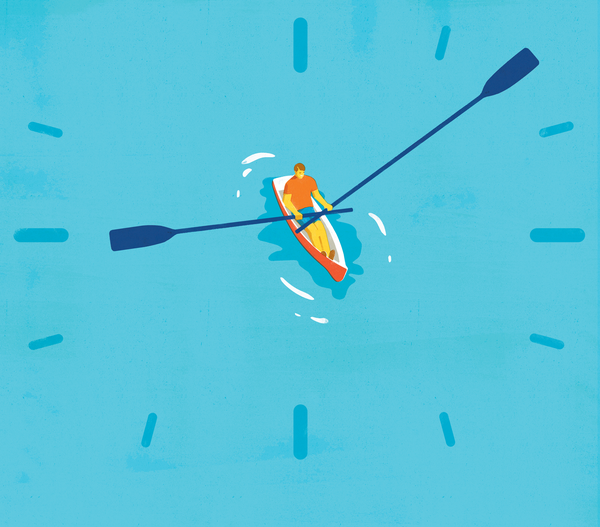
In this issue’s cover story, Jason G. Goldman covers a massive research study of 20,000 individuals in England that found that 120 minutes spent in nature every week proffered marked benefits in health and mental wellness (see “The Nature Cure”). While the scale of such an undertaking makes the work significant, the results are likely to be met by some societies with little surprise. Take Denmark, where for more than half a century families have sent their children as young as three years old to so-called forest kindergarten to forgo classroom curriculum and play and explore each day outdoors, no matter the weather. Some research has shown that those kids get sick less often, can concentrate better and have improved motor skill development. Perhaps this latest finding won’t spur the creation of “forest universities” or, sadly, “forest workplaces,” but if ever there was a case to get outside and commune with nature, this is it.

Cassandra Willyard writes about a string of recent advances that have helped patients with spinal cord injuries regain mobility and functionality (see “First Steps to a Revolution”). And David Adam profiles anesthesiologist John Carlisle, who, in his free time, sleuths hundreds of peer-reviewed papers for misleading or falsified data. His work has led to the retraction of hundreds of papers (see “The Data Detective”). Good reads such as these are best consumed while lounging outside, preferably under a leafy tree.

Andrea Gawrylewski is chief newsletter editor at Scientific American. She writes the daily Today in Science newsletter and oversees all other newsletters at the magazine. In addition, she manages all special editions and in the past was the editor for Scientific American Mind, Scientific American Space & Physics and Scientific American Health & Medicine. Gawrylewski got her start in journalism at the Scientist magazine, where she was a features writer and editor for "hot" research papers in the life sciences. She spent more than six years in educational publishing, editing books for higher education in biology, environmental science and nutrition. She holds a master's degree in earth science and a master's degree in journalism, both from Columbia University, home of the Pulitzer Prize.

More by Andrea Gawrylewski
SA Health & Medicine Vol 1 Issue 5This article was published with the title “Take It Outside” in SA Health & Medicine Vol. 1 No. 5 (), p. 2
doi:10.1038/scientificamerican102019-5EhoJf6S71I8pQHUEQyvO0

It’s Time to Stand Up for Science

If you enjoyed this article, I’d like to ask for your support. Scientific American has served as an advocate for science and industry for 180 years, and right now may be the most critical moment in that two-century history.

I’ve been a Scientific American subscriber since I was 12 years old, and it helped shape the way I look at the world. SciAm always educates and delights me, and inspires a sense of awe for our vast, beautiful universe. I hope it does that for you, too.

If you subscribe to Scientific American, you help ensure that our coverage is centered on meaningful research and discovery; that we have the resources to report on the decisions that threaten labs across the U.S.; and that we support both budding and working scientists at a time when the value of science itself too often goes unrecognized.

In return, you get essential news, captivating podcasts, brilliant infographics, can't-miss newsletters, must-watch videos, challenging games, and the science world's best writing and reporting. You can even gift someone a subscription.

There has never been a more important time for us to stand up and show why science matters. I hope you’ll support us in that mission.

Thank you,

David M. Ewalt, Editor in Chief, Scientific American

Subscribe