
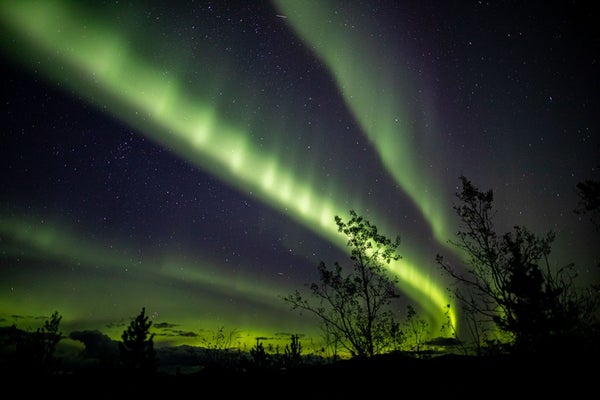
Auroras are nature’s most special light show: when charged particles from the sun hit our atmosphere, they can generate bright colors that dance across the night sky near the Earth’s poles. Auroras can come in various forms, including bands, rays, patches and more.
But why auroras form these patterns is less clear. Now, researchers say they’ve identified the “battery” that powers at least one kind of aurora—aurora arcs.
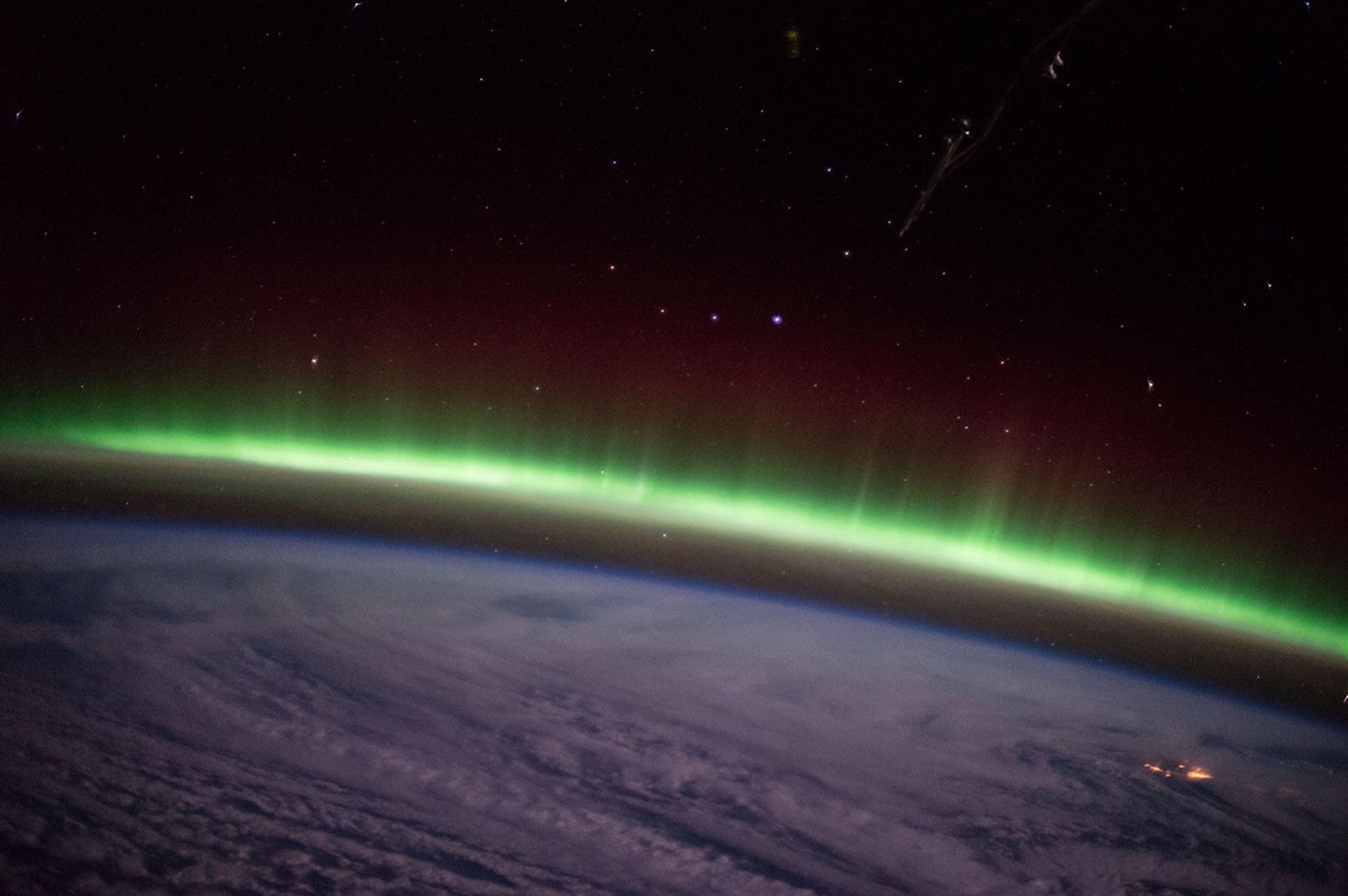
A green auroral arc appears above the clouds in this photo taken by an astronaut aboard the International Space Station in 2014.
NASA
On supporting science journalism
If you're enjoying this article, consider supporting our award-winning journalism by subscribing. By purchasing a subscription you are helping to ensure the future of impactful stories about the discoveries and ideas shaping our world today.
In a new study published in Nature Communications, scientists describe how charged particles in our atmosphere become powered up by “Alfvén waves,” a special kind of plasma wave that travels along Earth’s magnetic lines and acts like a “space battery,” according to NASA. Auroral arcs form when fast-moving electrons, juiced by Alfvén waves, hit atoms in our atmosphere, releasing light in towering bands.

A panorama of the Northern Lights across the northern, eastern and southern sky on February 27, 2025, near Churchill, Manitoba.
VW Pics/Getty Images
The discovery was something of a stroke of luck, made possible thanks to synchronized measurements of an auroral arc in 2015 by both military and NASA spacecraft. “These combined observations provided different viewpoints over a long enough time to reveal more about the conditions in space that helped create the arc,” NASA said in a statement.
Although the sun’s latest activity cycle has likely already peaked, 2026 is still expected to see plenty of auroras, with the season for the northern hemisphere running through March.