The Science of Spring’s Green Show

Spring’s burst of brightness comes before chloroplasts grow and mature

Rebecca Konte

Join Our Community of Science Lovers!


On supporting science journalism

If you're enjoying this article, consider supporting our award-winning journalism by subscribing. By purchasing a subscription you are helping to ensure the future of impactful stories about the discoveries and ideas shaping our world today.


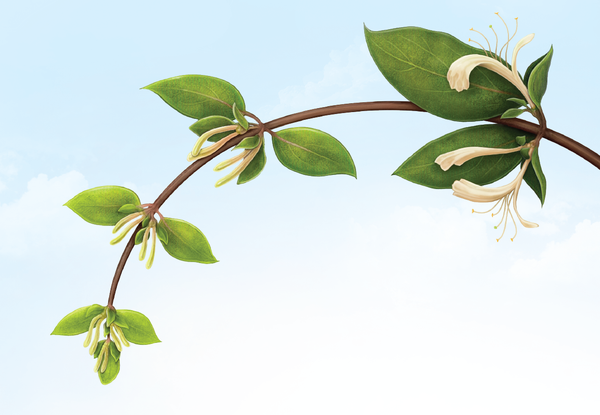
Every year trees put on a show in the spring by bursting with bright foliage that seems to celebrate the end of winter. What makes these early leaves so vibrant? The color of a leaf is determined by which wavelengths its cells absorb and which they reflect back at us. The chloroplasts inside these cells, which turn sunlight into energy through the process of photosynthesis, tend to absorb more blue and red wavelengths and less green light. Changes to the number and maturity of chloroplasts within a leaf, as well as to leaves' structures, cause the leaves to appear lighter in the spring and darker later on. “The time it takes to go through this maturity cycle is a couple of weeks at the start of the summer,” says Susan Ustin, an ecologist at the University of California, Davis.

Credit: Rebecca Konte; Sources: “Climate Change Indicators in the United States,” by U.S. Environmental Protection Agency; last updated December 20, 2022 (www.epa.gov/climate-indicators) (map, restyled for Scientific American by Jen Christiansen); Mark D. Schwartz 2021 update to data originally published in “Spring Onset Variations and Trends in the Continental United States: Past and Regional Assessment Using Temperature-Based Indices,” by Mark D. Schwartz, Toby R. Ault and Julio L. Betancourt, in International Journal of Climatology, Vol. 33; 2013 (data); Research by Amanda Hobbs

Clara Moskowitz is chief of reporters at Scientific American, where she covers astronomy, space, physics and mathematics. She has been at Scientific American for more than a decade; previously she worked at Space.com. Moskowitz has reported live from rocket launches, space shuttle liftoffs and landings, suborbital spaceflight training, mountaintop observatories, and more. She has a bachelor’s degree in astronomy and physics from Wesleyan University and a graduate degree in science communication from the University of California, Santa Cruz.

More by Clara Moskowitz

Rebecca Konte is a visual artist based in San Francisco, Calif. Her work can be found at www.rebeccakonte.com.

More by Rebecca Konte
Scientific American Magazine Vol 328 Issue 3This article was published with the title “The Science of Spring Green” in Scientific American Magazine Vol. 328 No. 3 (), p. 78
doi:10.1038/scientificamerican0323-78

It’s Time to Stand Up for Science

If you enjoyed this article, I’d like to ask for your support. Scientific American has served as an advocate for science and industry for 180 years, and right now may be the most critical moment in that two-century history.

I’ve been a Scientific American subscriber since I was 12 years old, and it helped shape the way I look at the world. SciAm always educates and delights me, and inspires a sense of awe for our vast, beautiful universe. I hope it does that for you, too.

If you subscribe to Scientific American, you help ensure that our coverage is centered on meaningful research and discovery; that we have the resources to report on the decisions that threaten labs across the U.S.; and that we support both budding and working scientists at a time when the value of science itself too often goes unrecognized.

In return, you get essential news, captivating podcasts, brilliant infographics, can't-miss newsletters, must-watch videos, challenging games, and the science world's best writing and reporting. You can even gift someone a subscription.

There has never been a more important time for us to stand up and show why science matters. I hope you’ll support us in that mission.

Thank you,

David M. Ewalt, Editor in Chief, Scientific American

Subscribe