
Thanks to science, we’ve experienced dramatic shifts in the way we understand ourselves, Earth and the universe in the past 12 months. But the hours, weeks and years people commit to the meticulous research that affects so much of our life can easily get buried in the flow of daily news.
So in recognition of this year’s achievements—and in keeping with the Thanksgiving season’s spirit of gratitude—we at Scientific American want to share the things that we’re thankful for in the world of science this year:
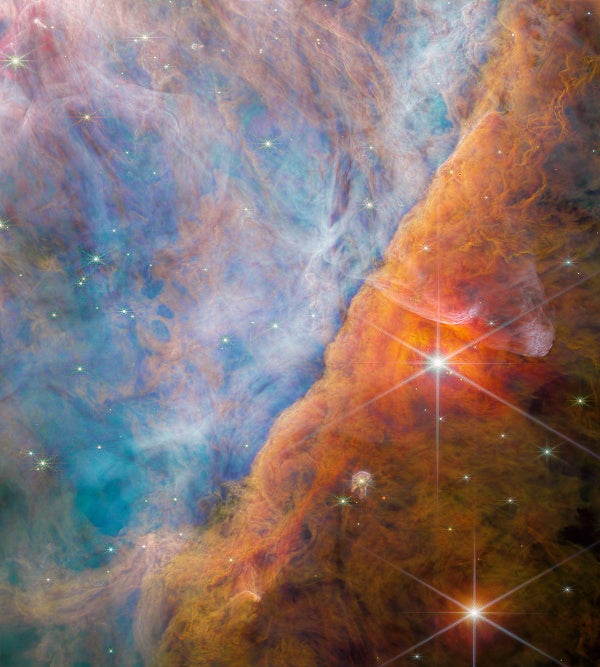
I’m grateful that the James Webb Space Telescope has provided some of the most gorgeous photographs of space that we’ve ever had. Additionally, we can thank a mathematician for solving a long-standing riddle about Möbius strips and OSIRIS-REx for being the first U.S. mission to return asteroid samples to Earth. —Clara Moskowitz, senior editor, space and physics
On supporting science journalism
If you're enjoying this article, consider supporting our award-winning journalism by subscribing. By purchasing a subscription you are helping to ensure the future of impactful stories about the discoveries and ideas shaping our world today.
I’m grateful that millions of people around the world are alive today thanks to PEPFAR (the U.S. President’s Emergency Plan for AIDS Relief) and drugs that treat AIDS or prevent HIV from progressing to AIDS. Millions more avoided infecting others or were protected from being infected with HIV thanks to PrEP (pre-exposure prophylaxis). —Laura Helmuth, editor in chief
I’m thankful for the approval of lecanemab, a new drug to slow the progression of Alzheimer’s disease. —Gary Stix, senior editor, mind and brain
I’m thankful for the scientists who are trying to ensure there is a welcoming space for everyone, regardless of race, gender, etcetera, to engage in science and that renewable energy continues to grow (even if we still need it to do so at a faster pace). Further, I’m grateful for the improvements we’re continually making in weather forecasting and for the scientists working so hard to build better models and get better data. —Andrea Thompson, associate editor, sustainability
I am thankful for scientists who risk their life to protect the lives of others and to now have pity for male tarantulas instead of fearing them. And I’m grateful for scientists who are trying to save the oceans so they can sustain future generations of people and marine creatures. —Mark Fischetti, senior editor, sustainability
I’m grateful for the approval of vaccines and medications for respiratory syncytial virus (RSV) after a 50-year-long search. —Josh Fischman, senior editor, medicine and science policy
I am thankful for cats, which are perfect, even in terms of evolution. Additionally, I’m grateful that paleontologists discovered an epic chonker that swam the ocean nearly 40 million years ago and that Narcan is becoming a little more accessible. —Meghan Bartels, news reporter
I’m grateful that artificial intelligence might let us chat with animals, that science shows we can manage a four-day workweek and that researchers are working on making air conditioners more environmentally friendly. —Sophie Bushwick, associate editor, technology
I’m grateful for Ada Limón’s beautiful poem about Europa. —Lauren Young, associate editor, health and medicine
I’m thankful for mRNA technology, which gave us the highly effective COVID vaccines that have saved millions of lives and could be used to treat cancer and other diseases. Further, I’m grateful that hearing aids may slow cognitive decline and that coffee is generally safe for your heart and may even help people stay active. —Tanya Lewis, senior editor, health and medicine