The Scientific Evidence for the Health Benefits of Cordyceps
The Cordyceps fungus is said to have the power to fix a host of health problems, from muscle fatigue to diabetes. But are the claims too good to be true?
A stronger immune system, more energy, improved endurance, and better stamina … one ingredient promises all of that. Whether it’s as an extract, a pill, or powdered into your coffee, the cordyceps fungus is promoted as a one-stop-shop to cure what ails you. Known as Himalayan Gold because it is often farmed in the Himalayan plateaus, cordyceps has long been used in ancient Chinese and Tibetan medicine for curing diarrhea, headache, cough, rheumatism, liver disease, kidney disease, and much more. But is it too good to be true?
What is Cordyceps?
On supporting science journalism
If you're enjoying this article, consider supporting our award-winning journalism by subscribing. By purchasing a subscription you are helping to ensure the future of impactful stories about the discoveries and ideas shaping our world today.
As we discussed in a previous episode, the cordyceps fungus grows like a parasite out of the brains of insects and spiders. The fungus takes over the bodies and brains of its victims forcing their zombified bodies to permanently relocate to the trees and low-lying jungle plants where the conditions are ideal for the fungus to thrive.
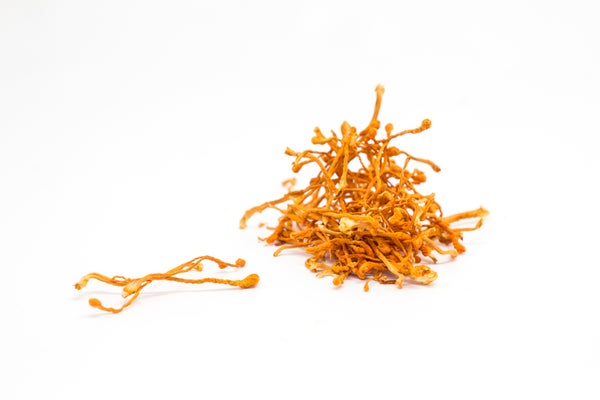
There are around 400 different species of cordyceps and many different biologically active compounds, but those most commonly used in medicine tend to be cordyceps sinesis and cordyceps militaris. A jar of 90 capsules will run you around $20, but if you want your dose straight from the source, a single dried wild Himalyana cordyceps sinsensis can cost $10 or more.
Great science journalism requires human expertise, time, effort and creativity. And it costs money. That’s why I and the journalists here at Scientific American hope you’ll join our community.
When you subscribe, you are supporting staff and freelance journalists who are passionate about telling science stories that are true, important and compelling. Our editors and reporters are often experts in their fields, which means they understand the nuances of big discoveries and can untangle the breakthroughs from the hype. With a subscription, you are also supporting rigorous fact-checking to ensure the words we publish are precise and accurate. And you’re supporting original illustrations, graphics and photos that bring you closer to an advanced laboratory, an ice sheet in Antarctica or a space mission in orbit. You’re helping us craft other types of high-quality journalism as well: Our newsletters are carefully written, edited and curated by staffers you have or will come to know and love. Our Science Quickly podcast is based on original reporting, collaboration with editors and scientists and exacting production.
Subscriptions keep this engine running so we can continue to deliver thoughtful, rigorous and independent science journalism to you. In an era of viral misinformation, this work is crucial. If you value what we do, I hope you’ll consider joining us as a subscriber
Thank you,
Jeanna Bryner, Editor in Chief, Scientific American