
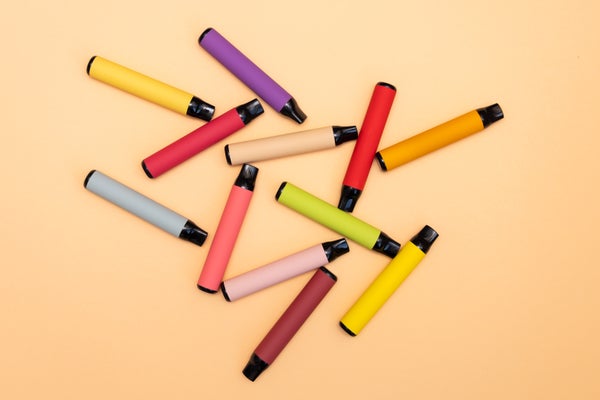
The U.S. Food and Drug Administration’s decision to approve the sale and marketing of four fruit- or mint-flavored vapes marks a significant rollback of Biden administration restrictions that had banned many of these products.
The FDA cited vaping as a possible tool to help the 25 million Americans who smoke cigarettes quit using them and described e-cigarettes as a better, less harmful alternative to traditional tobacco products. But several studies suggest vaping carries its own health risks, such as high blood pressure and nicotine addiction, as well as an increased risk of asthma in teens. A 2018 National Academies of Sciences, Engineering, and Medicine analysis found that e-cigarettes’ formulations often include toxic chemicals, some of which can cause lung disease and heart disease.
The FDA approval applies only to vapes made by a company called Glas. These e-liquid pods are used with a device that is also made by the company. They all contain 50 milligrams of nicotine per milliliter (5 percent) and come in flavors marketed under the names “Classic Menthol,” “Fresh Menthol,” “Gold,” which has a mango flavor, and “Sapphire,” which has a blueberry flavor.
On supporting science journalism
If you're enjoying this article, consider supporting our award-winning journalism by subscribing. By purchasing a subscription you are helping to ensure the future of impactful stories about the discoveries and ideas shaping our world today.
The FDA said Glas had earned the approval by demonstrating that its age-restriction technology is viable—smoking is illegal for people under 21 years of age. The system includes requirements that users verify their age with a government ID and pair the vaping device to a smartphone via Bluetooth. And it employs random biometric check-ins to confirm that the registered user is the person using the device. Glas also has to ensure its marketing materials only target adults aged 21 and older, and it must track customer demographics.
“This outcome reflects years of investment in science, product development, and regulatory engagement,” said Glas CEO Sean Greenbaum in a statement. “Our data show that flavored products can play an important role in helping adult smokers move away from combustible cigarettes, while our technology is designed to help limit youth access and support responsible use. We recognize that these authorizations come with strict requirements and ongoing FDA oversight, and we support that framework.”
Bret Koplow, acting director of the FDA’s Center for Tobacco Products, called device access restrictions a “potential game changer” in a press release from the agency.
“This technology is also an indication of the role innovation may serve in the effort to protect young people from threats posed by nicotine use and addiction while helping to enable availability of an expanded array of flavored options for adults who smoke who may use these products to completely switch away from regular cigarettes,” he added.
The approval comes after President Donald Trump promised to “save vaping again” while he was running for his current office in 2024. Notably, in 2019, during his previous term, Trump signed into law a bill that raised the federal age to purchase tobacco and vaping products to 21.
Some lawmakers are criticizing the FDA’s new decision as risking public health. Democratic senator Dick Durbin of Illinois and Republican senator Susan Collins of Maine co-signed a letter dated to May 5 in which they expressed concern that the approval’s public health risks outweighed any benefits.
“Given the importance of preventing youth use of all tobacco products and the strong evidence that flavors increase the appeal and use of e-cigarettes by youth, FDA should not ignore the basic reality that kids are drawn to what flavors are most available to them, particularly since FDA recognizes the underlying risk of flavors to youth,” the senators wrote.
The antinicotine advocacy group Truth Initiative said in a statement that the FDA’s measures to prevent minors from picking up vaping would be a “key test case” of how marketing restrictions could limit youth use.
“The FDA has a responsibility to ensure that products meet a rigorous public health standard that considers both the potential benefit for adults who smoke and the risks to youth,” the organization said in a press release. “With these products now authorized, the agency must closely monitor how they are marketed and used to confirm that they continue to meet that high bar—and take swift action if they don’t.”