
For more than 2,000 years Chinese healers have used herbal powders and tinctures, dust made from various animal parts and strategically placed needles to treat a host of human ailments. These are used in hundreds of nations globally, but the practice in China is perhaps the most extensive, documented and catalogued. Traditional Chinese medicine (TCM) is based on the concept of qi, a system of energy that flows along meridians in the body to maintain health.
Over the past decade proponents of TCM have worked hard to move it into the mainstream of global health care—and it appears those efforts are coming to fruition. The latest (11th) version of the World Health Organization's list known as the International Statistical Classification of Diseases and Related Health Problems (ICD) will include these remedies for the first time.
According to its own mandate, the WHO sets the norms and standards for medical treatment around the globe and articulates “ethical and evidence-based policy options.” It categorizes thousands of diseases and influences how doctors treat them; how insurers cover those treatments; and what kind of research is done on which ailments. More than 100 countries rely on the document to determine their medical agendas.
On supporting science journalism
If you're enjoying this article, consider supporting our award-winning journalism by subscribing. By purchasing a subscription you are helping to ensure the future of impactful stories about the discoveries and ideas shaping our world today.
To include TCM in the ICD is an egregious lapse in evidence-based thinking and practice. Data supporting the effectiveness of most traditional remedies are scant, at best. An extensive assessment was done in 2009 by researchers at the University of Maryland: they looked at 70 review papers evaluating TCM, including acupuncture. None of the studies proved conclusive because the data were either too paltry or did not meet testing standards.
To be sure, many widely used and experimentally validated pharmaceuticals, including aspirin, decongestants and some anticancer chemotherapies, were originally derived from plants or other natural sources. Those drugs have all gone through extensive clinical testing of safety and efficacy, however. Giving credence to treatments that have not met those standards will advance their use but will also diminish the WHO's credibility.
China has been pushing for wider global acceptance of traditional medicines, which brings in some $50 billion in annual revenue for the nation's economy. And in 2016 Margaret Chan, then the WHO director, praised China's plans to do so. But while it's a good idea to catalogue TCM and make health workers aware of treatments used by millions, their inclusion in the ICD recklessly equates them with medicines that have undergone clinical trials.
In China, traditional medicines are unregulated, and they frequently make people sick rather than curing them. One particularly troublesome ingredient, aristolochic acid, is commonly used in traditional remedies and has been linked to fatal kidney damage and cancers of the urinary tract.
A 2018 study in the British Journal of Clinical Pharmacology tested 487 Chinese products taken by sick patients and discovered 1,234 hidden ingredients, including approved and banned Western drugs, drug analogues and animal thyroid tissue. And in 2012 a team led by Megan Coghlan, then at Murdoch University of Australia, identified the DNA sequences in 15 samples of traditional medicines in the form of powders, tablets, capsules, bile flakes and herbal teas. The samples also contained plants that produce toxic chemicals and animal DNA from vulnerable or endangered species (the Asiatic black bear and saiga antelope, for example) and other creatures protected by international laws.
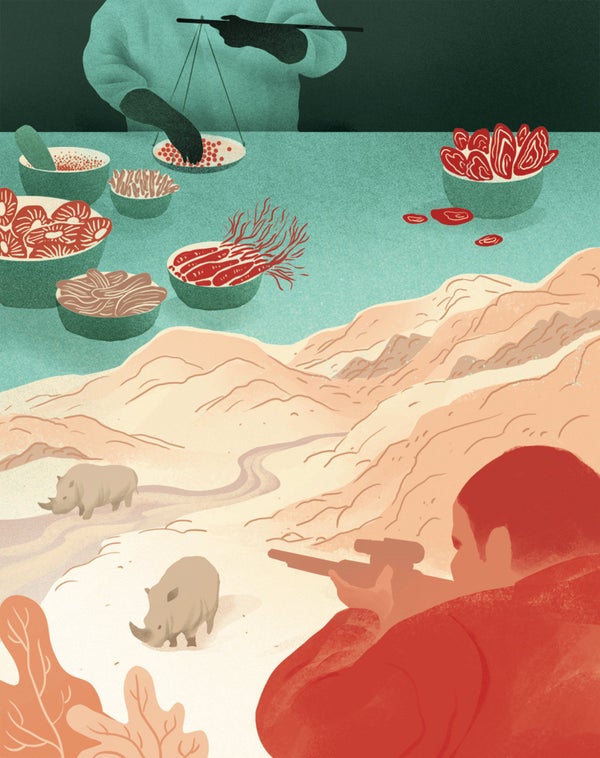
Thus, the proliferation of traditional medicines would have significant environmental impacts on top of the negative health effects. It would contribute to the destruction of ecosystems and increase the illegal trade of wildlife. China announced last October that it was legalizing the controlled trade of rhinoceros horn and tiger bone. (The move was postponed in November, following a global outcry.) Both are believed by practitioners to have the power to cure a range of ailments, from fever to impotence—although no study has found any beneficial outcome of ingesting either. Allowing even the controlled harvest of otherwise endangered creatures will boost illegal poaching, critics say.
Until they undergo rigorous testing for purity, efficacy, dosage and safety, the WHO should remove traditional medicines from its list. These remedies should be given the same scrutiny as other treatments before being included in standard care practices.
