
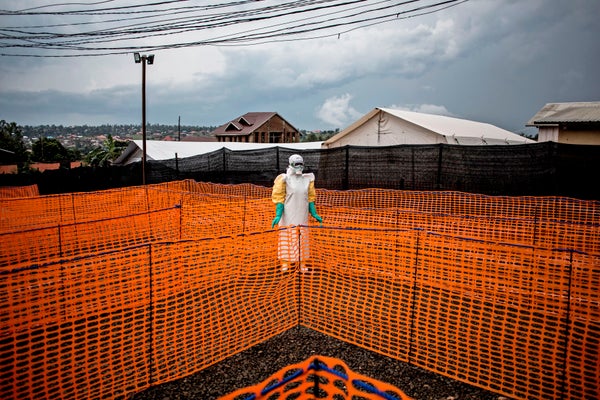
At the beginning of this year, the World Health Organization (WHO) issued a list of top 10 threats to Global Health. These threats ranged from climate change and non-communicable diseases, to antimicrobial resistance and vaccine hesitancy. The list also included HIV, dengue, weak primary care, fragile and vulnerable settings (e.g. regions with drought and conflict), Ebola, and threat of a global influenza pandemic.
One underlying theme is the relevance of human behavior to many, if not all, of these threats. For some global health threats, the connection is obvious: non-communicable diseases and their associated behavioral risk factors (i.e. smoking or poor diet), or the reluctance of some parents to vaccinate their children and over-prescription and over-demand of antibiotics—a reason for emergence of antibiotic resistance—have clear behavioral connotations. For many others, the link is less obvious but equally important. For example, human behavior is largely at the center of global climate change and will be at the core of any substantial response to it. Similarly, HIV prevention, avoiding dengue carrying mosquitos, shoring up primary care delivery, and responding to Ebola and influenza outbreaks require modifying or working with human behavior.
And yet, the global health response to these threats lacks a coherent focus on behavioral insights. In recent years, fields such as economics and poverty alleviation have embraced behavioral insights as central to understanding and responding to major challenges in these fields. The 2002 and 2017 Nobel prizes in economics were awarded for research on behavioral economics. While behavioral tools have been used for health promotion for several decades, they are inconsistently included in global health policy-making.
On supporting science journalism
If you're enjoying this article, consider supporting our award-winning journalism by subscribing. By purchasing a subscription you are helping to ensure the future of impactful stories about the discoveries and ideas shaping our world today.
Fortunately, there are a few models for incorporating insights from behavioral research into large-scale policy initiatives. One approach, used by many governments and some multi-lateral institutions, is establishing so called “nudge units.” These units use lessons from behavioral economics and psychology to inform public policy.
The first such unit, officially called the Behavioral Insights Team, was established in the United Kingdom in 2010 and was initially based within the UK Cabinet Office. It now exists as a company co-owned by the Cabinet Office. The Obama administration established a U.S. nudge unit, initially known as the White House Social and Behavioral Sciences Team. This unit has evolved into the Office of Evaluation Science within the General Services Administration. Other countries such as Australia and Singapore have established similar entities. In fact, the concept of promoting behavioral insights-based policy-making has also been adopted by multi-lateral organizations such as the World Bank and the Organization for Economic Co-operation and Development.
While not every program initiated by a nudge unit has been equally successful, there are plenty of examples of policy interventions that establish the utility of these units. For example, the UK nudge unit demonstrated that behavioral insights can be used to reduce medication errors, increase commitment to organ donations, and ensure that people show up for their doctor’s appointments.
Dr. Tedros Adhanom Ghebreyesus, the WHO Director General who soon after his election to this position promised “a transformed WHO,” has encouraged countries and the WHO’s partners to deliver people-centered care. Last month, Dr. Tedros (as he prefers to be called) announced a major restructuring of the WHO. He also indicated that “the process of fully implementing the new operating model will take more time.” This period of transition is precisely the right time for establishing a nudge unit at WHO.
While there are templates of effective nudge units from various countries and organizations, WHO’s behavioral insights unit will have to reflect its own unique role: First, a WHO nudge unit should support ministries of health of WHO Member States in addition to working with WHO’s core programs—including the newly established health emergencies program. Second, global health problems are multi-faceted and, therefore, require interdisciplinary solutions. A WHO nudge unit must be staffed by individuals with diverse backgrounds, not just those from the social sciences or medical humanities but also epidemiologists and public health practitioners with behavioral sciences training. Lastly, all initiatives of this unit must be evidence-based and all new interventions must be rigorously evaluated—a tradition upheld by effective nudge units.
As heath ministers and global health leaders prepare to convene at the World Health Assembly in Geneva this month, the WHO would be well-advised to reflect. The WHO was established to advance human health—and human behavior is a core determinant of human health and well-being. Now is the time for this fact to fully accommodated in its structure and programs.