
For decades mercury has been settling into lakes and oceans, where it builds up relentlessly in fish and everything that eats them—humans included. This pollution, which exposes millions of people to a toxic substance that can damage neural and reproductive health, “always seemed like such an intractable thing,” says Kate Tepper, a postdoctoral researcher at Australia’s Macquarie University.
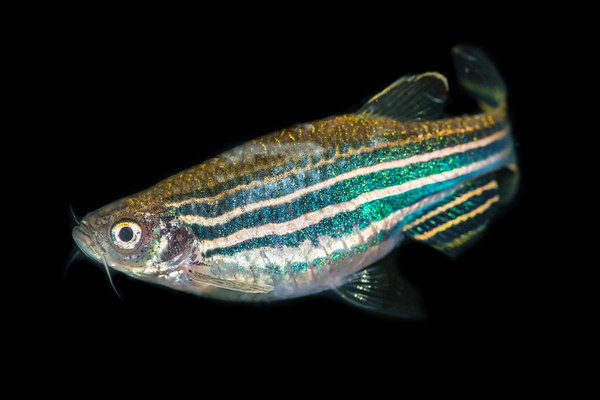
Seeking ways to make a dent in this problem, Tepper and her colleagues genetically engineered zebra fish and fruit flies so that they convert methylmercury—the kind that “bioaccumulates,” binding to muscle tissue and becoming more concentrated as it moves up the food chain—into the less harmful elemental mercury, which evaporates from the body as gas.
The researchers injected fish and fly embryos with Escherichia coli genes to produce an enzyme that catalyzes the conversion process. As reported in Nature Communications, the modified zebra fish contained 64 percent less methylmercury than their unmodified counterparts, and the fruit flies had 83 percent less. The study authors propose that small, mercury-resistant fish could serve as a self-purifying foundation for the food chain and shield larger fish, birds and humans. Modified insects, meanwhile, could remove mercury from the environment as they munch on sewage and fishery offal in enclosed facilities.
On supporting science journalism
If you're enjoying this article, consider supporting our award-winning journalism by subscribing. By purchasing a subscription you are helping to ensure the future of impactful stories about the discoveries and ideas shaping our world today.
Tepper’s team isn’t the first to advocate bioremediation, the use of biological processes to clean up contamination. Previous research has shown that plants with certain bacterial genes (as well as the bacteria themselves) are powerful detoxifiers. But those organisms can’t reach the pollutants already inside fish. By equipping animals with these enzymes, Tepper says, “you’re targeting mercury in the place where it’s causing the most toxicity.”
University of Connecticut marine scientist Robert Mason, who studies mercury in aquatic systems and was not involved in the study, says modified animals could help disrupt bioaccumulation on a local scale. But he sees a limitation, even for small-scale cleanups: elemental mercury can change back into methylmercury once it is released into the atmosphere. Facilities where insects process organic waste could be filtered to capture mercury, but with fish a solution would be less straightforward.
Mason and Tepper agree the fish would ideally be introduced at highly contaminated sites. Tepper hopes they can be used to stock lakes near mercury hotspots created by artisanal gold mining in Africa, Indonesia and the Amazon—regions where many people rely on subsistence fishing.
But first the researchers need safety measures to constrain the genetically modified organisms. Tepper envisions eventual field trials in small lakes, possibly with sterilized fish, so scientists can test for unintended ecological effects in a controlled setting.
Such trials are years away. But someday, Tepper suggests, many nasty substances such as microplastics, pharmaceuticals and PFAS could perhaps be neutralized with the tweak of a genome. “It’s proof of concept for engineering animals for bioremediation,” she says. “Potentially you could use this for a lot of pollutants.”