
IN BRIEF
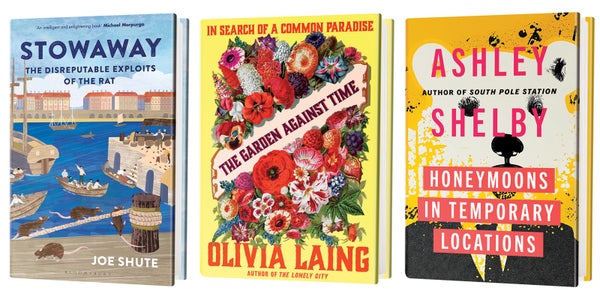
Stowaway: The Disreputable Exploits of the Rat
by Joe Shute.
Bloomsbury Wildlife, 2024 ($26)
New Yorkers will recall a sanitation commissioner’s now infamous proclamation: “The rats don’t run this city. We do.” Rat chroniclers often show disdain toward their subjects, but in Stowaway, journalist Joe Shute positions himself instead as a kind of Lorax, speaking for the rats when few others will. He guides readers down sewers, into bustling (rat-filled) metropolises and through mounds of research in pursuit of a deeper understanding of rats and, by extension, humans. Shute’s earnest, playful descriptions of these creatures—“a shadow of us,” “the ultimate transgressors”—betray some bias. But his enthusiasm spreads easily, much like the ultrasonic laughter that his pet rats, Molly and Ermintrude, make when tickled. —Maddie Bender
On supporting science journalism
If you're enjoying this article, consider supporting our award-winning journalism by subscribing. By purchasing a subscription you are helping to ensure the future of impactful stories about the discoveries and ideas shaping our world today.
The Garden against Time: In Search of a Common Paradise
by Olivia Laing.
W. W. Norton, 2024 ($27.99)
When the COVID pandemic shuttered communal outdoor spaces, author Olivia Laing began restoring a private 18th-century garden in Suffolk, England. Her memoir alternates between vignettes of this restoration process—from uprooting obnoxious nettles to planting floors of wallflowers—and thoughtful research on the cultural significance of reconstructing Eden. As Laing guides readers through the exclusionary history of plant domestication and land ownership, she seeks to transform her garden into a place of universal refuge. Written in lyrical prose that almost begs to be sung, this book offers captivating insights into “the cost of building paradise.” —Lucy Tu
Honeymoons in Temporary Locations
by Ashley Shelby.
University of Minnesota Press, 2024 ($22.95)
Unsettling and satirical, this collection of stories and errata from a “post-Impact” near future considers life amid escalating climate disasters, focused on the lived experience of change as it’s happening. Freighters relocate Arctic life to the Antarctic; “Internally Displaced Persons of Means” flee America’s coasts and head to heartland Resettlement Zones; and a pharmaceutical company offers Climafeel, “a recombinant DNA biologic that blunts the effects of solastalgia,” the psychological distress afflicting survivors in a world upended. Writer Ashley Shelby’s storytelling is brisk, sharp-elbowed and deeply empathetic, even as she experiments with a host of forms, including the brochure text for a cruise to flooded cities. —Alan Scherstuhl