
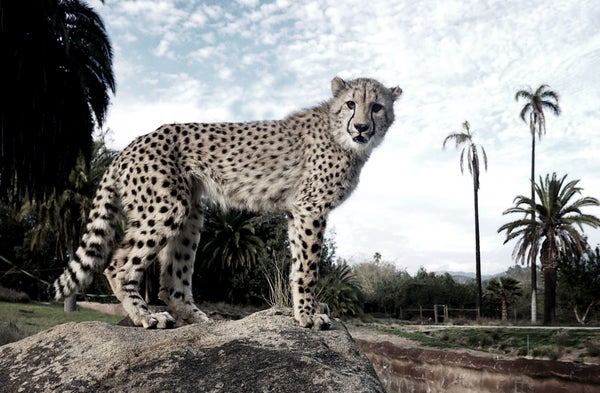
Zoos looking to breed cheetahs in captivity face a serious matchmaking problem. But researchers may have found an unconventional solution: letting feline bachelorettes choose a mate based on the scent of his pee.
New research shows that female cheetahs can detect the genetic relatedness of a potential mate from the smell of his urine alone—and prefer that of more distantly related males. The finding could improve captive-breeding programs and help conserve the speedy cats. “There’s so much information that passes through urine. It makes sense that it’s a conduit for [the cheetahs] to be able to make a choice on what would be a good mate,” says Regina Mossotti, director of animal care and conservation at the Endangered Wolf Center in Eureka, Mo., and lead author of the cheetah study, which was published in the July/August issue of Zoo Biology.
Mossotti says zoos hoping to breed cheetahs generally attempt to arrange liaisons with animals at other facilities in an effort to avoid inbreeding—which can result in less healthy offspring. Zoos use a matchmaking system based primarily on genetic similarity, but their calculations do not always result in a mating success.
On supporting science journalism
If you're enjoying this article, consider supporting our award-winning journalism by subscribing. By purchasing a subscription you are helping to ensure the future of impactful stories about the discoveries and ideas shaping our world today.
In the wild, female cheetahs wander far and wide, apparently staking out potential mates by sniffing the scent markings males leave around their territories. So the researchers wanted to test the idea of using urine to introduce possible partners to one another in captivity. Mossotti and her team drove around the U.S. collecting bottles of cheetah pee at various zoos. The researchers then exposed 12 female cheetahs to samples from 17 male “urine donors” of varying genetic relatedness and assessed the big cats’ responses to the specimens. They found that females always spent more time in the vicinity of the pee from felines less closely related to them.
Paul Funston, a senior program director at the global wild cat conservation organization Panthera, who was not involved in the research, says it is useful and has a good experimental design—but he questions the utility of zoo breeding programs for these animals. “There’s not a lot of evidence that captive cheetahs can be successfully rewilded,” he says, but he adds that there may be a better argument for the captive breeding of some particularly endangered subspecies.
The next phase in the research would be to see if this pee test translates to greater mating success. Although doing so may take some work, Mossotti says the team’s research is already changing the way zoos think about managing their captive populations.