
Thirty-one of the largest U.S. science societies—collectively representing millions of scientists—sent a letter to Congress this week urging lawmakers to recognize anthropogenic climate change and take decisive action to combat it and its effects. “The letter continues the decades-long efforts of the scientific community to persuade Congress to act on the climate crisis,” says Sarah Green, a chemistry professor at Michigan Technological University who studies climate change and who is affiliated with of several of the societies that signed the letter.
A previous letter with nearly identical language was sent by 18 of the 31 organizations in 2009 (pdf), and some scientists are skeptical that this new document will budge the stubborn persistence of climate denial among congressional representatives. “I hate to sound like a wet blanket, but this is nice. It’s well-intentioned, but it won’t do anything,” says Jon Foley, executive director of the California Academy of Sciences. “We’re being bad scientists—not in how we look at our climate data but in how we look at our communication data.” He says scientists are wrong to hope that simply explaining the science again will change the minds of politicians who have not listened before. But that does not mean he thinks scientists should give up. “The antidote to despair is to roll up your sleeves and find people who are listening,” Foley says. “Why do we think that Congress is the only way that things get done? Because it’s not.” He says the 31 organizations would do better to target their message to mayors, philanthropists, Silicon Valley billionaires and other people in power who have shown a willingness to engage with the evidence.
Christine McEntee, executive director and CEO of the American Geophysical Union—one of the organizations that signed the letter—thinks there has been a change in Congress since the 2009 letter. She cites as evidence of progress the newly formed bipartisan Climate Solutions Caucus and a resolution recognizing climate change introduced in the House of Representatives last fall by Rep. Chris Gibson (R–N.Y.). “I’m certainly hoping that this time we’re going to see this increasing momentum, increasing discussion, and we’re hopeful that we’re going to see bipartisan support” for climate change action, McEntee says.
On supporting science journalism
If you're enjoying this article, consider supporting our award-winning journalism by subscribing. By purchasing a subscription you are helping to ensure the future of impactful stories about the discoveries and ideas shaping our world today.
“While it is impossible to detect the impact from a specific letter, just like we can’t attribute a specific storm to climate change, we can hope that repeated blasts will get their attention,” Green says. “Certainly, the public is making the connections, with even Republican voters beginning to demand action.”
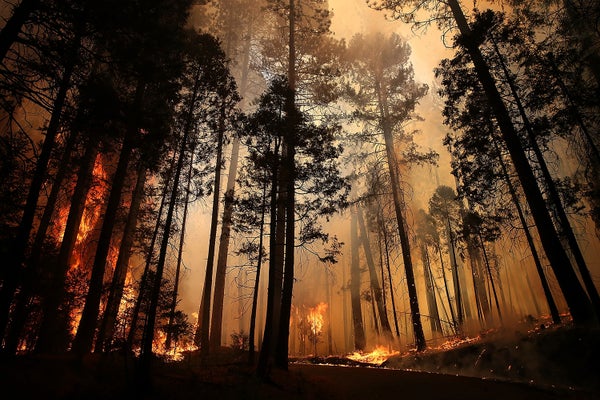
The letter, which was spearheaded by the American Association for the Advancement of Science, warns of the numerous threats posed by climate change—including extreme weather events, regional water scarcity, heat waves and wildfires. It also highlights the need for substantial reductions in greenhouse gas emissions. The letter ends with a promise of collaboration, saying, “We in the scientific community are prepared to work with you on the scientific issues important to your deliberations as you seek to address the challenges of our changing climate.”
Editor’s Note: Karl J. P. Smith, the author of this article, is currently a fellow in the American Association for the Advancement of Science.