
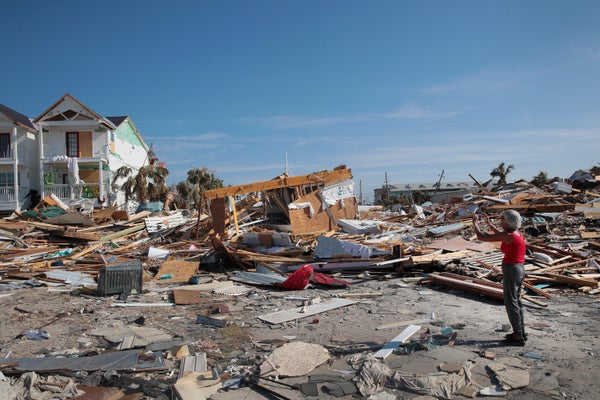
A first-of-its-kind study by the Federal Emergency Management Agency shows that modern building codes are averting $1 billion a year in structural damage in California and Florida, the nation's most disaster-prone states, according to preliminary findings.
The study could be groundbreaking in the agency's effort to convince states and localities to adopt up-to-date building codes and to overcome opposition from builders, who have successfully argued in some areas that strengthened codes only increase construction costs.
"This gives us the foundation to back up the recommendations that we're making," FEMA building engineer Jonathan Westcott said yesterday at a conference on flood prevention.
On supporting science journalism
If you're enjoying this article, consider supporting our award-winning journalism by subscribing. By purchasing a subscription you are helping to ensure the future of impactful stories about the discoveries and ideas shaping our world today.
"We know that the other side's got a lot of data and information," Westcott added. "We're hoping we can come to the table with similar data to back up recommendations we think communities and states should be doing in terms of codes."
FEMA's early findings resemble other analyses that show how modern building codes can avert billions or trillions of dollars of damage through steps such as elevating homes and making buildings more resilient to hurricane winds, tornadoes and earthquakes.
The FEMA study, which will be completed in August, is taking the unique step of calculating how much damage has been avoided nationwide by the adoption of modern codes. Other studies project how much damage the codes could avert in the future.
"This study will for the first time quantify losses avoided from the adoption of modern building codes," Westcott said during a virtual presentation at the Association of State Floodplain Managers' annual conference.
The preliminary analysis calculated how much damage from flooding, hurricane winds and earthquakes has been averted in California and Florida communities that adopted building codes that were written in 2000 or later.
"The combined [$1 billion] savings from these two states demonstrate the high value of adopting I-Codes for hazard mitigation as a return on investment," FEMA wrote in a synopsis of the early findings, referring to model construction codes published by the International Code Council.
The study involves looking at newer buildings constructed under modern codes and determining how much damage they would have sustained from flooding, hurricane winds and earthquakes if they had been built to "weaker standards," Shane Parson of AECOM, which is working with FEMA, said during the conference.
FEMA's study is part of the agency's broader effort to reduce the growing cost of natural disasters by convincing states and municipalities to adopt post-2000 building codes. Two-thirds of the nation's localities haven't adopted recent model codes, Westcott said.
"Oftentimes, communities don't have this information. They don't understand the long-term benefits of adopting stronger codes, and all they're hearing is one side of the story," Westcott said. "Instead of just hearing about how expensive it is to add a foot of freeboard, they're going to understand the financial benefits of doing that so they can make a balanced decision on what's best for their community."
Reprinted from Climatewire with permission from E&E News. E&E provides daily coverage of essential energy and environmental news at www.eenews.net.