
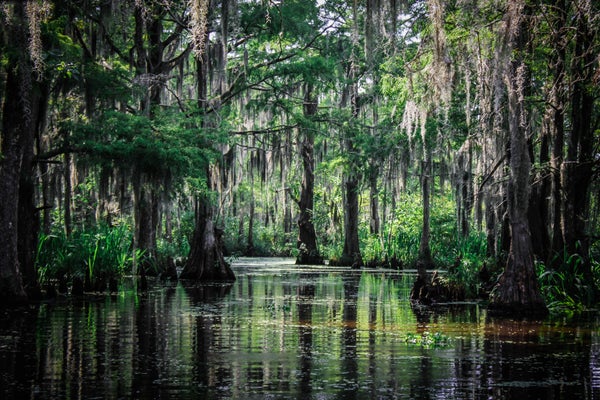
The Trump administration today is proposing to severely restrict the number of wetlands and waterways covered by the Clean Water Act.
EPA and the Army Corps of Engineers are unveiling a new definition for “waters of the U.S.,” or WOTUS, that would erase federal protections for streams that flow only after rainfall or snowmelt, as well as wetlands without surface water connections to larger waterways.
Acting EPA Administrator Andrew Wheeler celebrated the new definition, saying, “Our new, more precise definition means that hardworking Americans will spend less time determining whether they need a federal permit and more time upgrading aging infrastructure, building homes, creating jobs and growing crops to feed our families.
On supporting science journalism
If you're enjoying this article, consider supporting our award-winning journalism by subscribing. By purchasing a subscription you are helping to ensure the future of impactful stories about the discoveries and ideas shaping our world today.
“Property owners should be able to stand on their property and be able to tell if a water is federal or not without hiring outside professionals.”
The Trump administration proposal covers six types of aquatic resources: traditionally navigable waters, tributaries, impoundments, wetlands adjacent to traditionally navigable waters, some ditches, and some lakes and ponds.
The proposal covers streams and creeks that flow year-round or intermittently into larger downstream waters, including navigable waters and other tributaries to them.
Specifically, the new definition would apply to intermittent or perennial streams that contribute flow to navigable waters in a “typical year,” meaning over a rolling 30-year average, said EPA Office of Water chief David Ross.
Ephemeral streams that flow only after heavy rains or during snowmelt would not be covered under the proposal.
Wetlands with a direct surface water connection to a tributary in a “typical year” would be protected. An example, Ross said, would be a river that floods its banks every spring and flows into a forested wetland on an annual basis.
The Trump rule would not protect wetlands that are separated from tributaries by land, dikes or other features.
At least some of the waterways excluded by the Trump administration would have been protected by both the George W. Bush and Obama administrations.
Policies from both prior administrations protected wetlands with either surface or shallow subsurface water connections to navigable waters, and they protected some wetlands that were not directly connected by water to larger waterways.
Under the Obama-era Clean Water Rule, ephemeral streams were protected if they had an identifiable bed, bank and high-water mark. Bush-era guidance protected those streams if they had a significant hydrologic or ecological connection to navigable waters.
Once today’s proposal is printed in the Federal Register, the public will have 60 days to comment. EPA and the Army Corps will then have to review the comments before issuing a final rule, which will almost certainly face a legal challenge from environmental groups.
Reprinted from Climatewire with permission from E&E News. E&E provides daily coverage of essential energy and environmental news at www.eenews.net.