
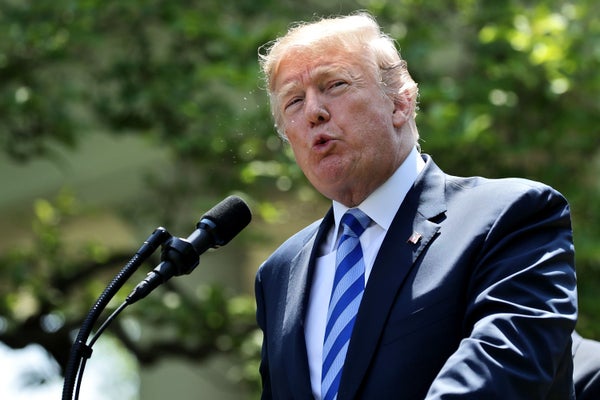
The president who stood in the Rose Garden Friday to deliver an address on lowering prescription drug prices wasn’t the same one who, less than 18 months ago, decried pharma companies for “getting away with murder.”
Instead, standing next to the former CEO of Eli Lilly USA, a substantially less bombastic President Trump delivered a measured and speedy address—and unveiled a menu of potential policy changes—that hardly touch the industry he once denounced.
“I’ve instructed Secretary Azar to begin moving forward on reforms that will bring soaring drug prices back down to earth,” Trump said. “We will have tougher negotiation, more competition, and much lower prices at the pharmacy counter. And it will start to take effect very soon.”
On supporting science journalism
If you're enjoying this article, consider supporting our award-winning journalism by subscribing. By purchasing a subscription you are helping to ensure the future of impactful stories about the discoveries and ideas shaping our world today.
The restrained address followed at least two weeks in which the president’s remarks — and hints from his top deputies about what he might say — dominated much of Washington and Wall Street’s attention. In the end, however, the policies were largely a repeat of proposals first unveiled in the Trump administration’s February budget request, or hinted at in other regulations.
They also remain mere proposals—another set in a long list of potential actions that the Trump administration has trumpeted and publicized but not yet enacted.
Even the strongest among them, moreover, is a far cry from the bold, progressive ideas Trump championed on the campaign trail, like calling on Congress to allow Medicare to negotiate prices for prescriptions or importing drugs from other countries. Various policies are better for one health care industry than another—but it isn’t clear at all whether patients, especially those who aren’t on Medicare—will notice any difference, especially in the short-term.
Drug makers, in particular, will largely escape these policies with little impact. If anything, the administration’s potential efforts to pressure foreign trading partners to “pay more” for drugs will improve their bottom lines.
Their well-paid lobbyists, however, didn’t fare so well.
“The drug lobby is making an absolute fortune at the expense of American consumers,” Trump said. “No industry spends more money on lobbying than the pharmaceutical, health products industry.”
At that line, Health and Human Services Deputy Secretary Eric Hargan raised an eyebrow. Office of Management and Budget Director Mick Mulvaney, also present in the Rose Garden, rubbed his forehead.
Perhaps the hardest hit, at least rhetorically: the pharmacy benefit managers, often referred to as “middlemen,” who negotiate with pharmaceutical companies to reduce the cost of drugs on behalf of insurers and employers. The industry has become a favorite of pharma’s, as it works to shift blame for high prices onto other sectors.
“We’re very much eliminating the middlemen,” Trump said. “The middlemen became very, very rich. Whoever those middlemen were, and a lot of people never even figured it out, they’re rich. They won’t be so rich anymore.”
Someone who used to be one of those middlemen now has a large role shaping policy — Daniel Best, Azar’s senior adviser on drug pricing, was hired in April from CVS Caremark, a pharmacy benefit manager, where he made over $500,000.
Lev Facher contributed reporting.
Republished with permission from STAT. This article originally appeared on May 11, 2018