
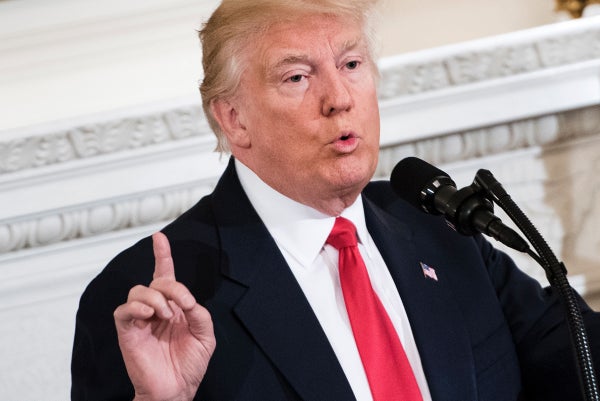
U.S. President Donald Trump signed an order on Tuesday directing regulators to review an Obama administration rule that expanded the number of federally protected waterways as the new president targets environmental regulations conservatives label as government overreach.
Trump's executive order directs the Justice Department to ask a federal court to put legal challenges to the rule on hold as the administration conducts its review, a senior official said.
The order, which the White House did not immediately make public, will kick off what will likely be a lengthy process to undo the Waters of the United States (WOTUS) rule, finalized by the Environmental Protection Agency and the U.S. Army Corps of Engineers in 2015 to clarify which bodies of water are covered by the Clean Water Act.
On supporting science journalism
If you're enjoying this article, consider supporting our award-winning journalism by subscribing. By purchasing a subscription you are helping to ensure the future of impactful stories about the discoveries and ideas shaping our world today.
Trump said during the signing that the Clean Water Act should apply only to navigable waters that affect interstate commerce.
"A few years ago the EPA decided that navigable waters can mean nearly every puddle or every ditch. It was a massive power grab," Trump said.
The rule has faced intense political and legal opposition from Republican lawmakers, farmers and energy companies. It was blocked by a federal appeals court pending further court challenges.
Federal law requires that the administration undertake a formal evaluation of the rule before a decision is made about whether to rescind the regulation, the senior official said, adding that the review would likely take a "long time to get through."
The Environmental Protection Agency under former president Barack Obama said the rule protected waters that are next to rivers and lakes and their tributaries "because science shows that they impact downstream waters."
Dozens of agricultural groups, states and municipalities had sued to block the rule. The challengers contended the EPA's move had improperly expanded federal regulatory power.
Senator Tom Carper of Delaware, the top Democrat on the Senate environment committee, said Trump's order put the country's streams and wetlands at risk of pollution.
"The only thing today's executive order makes clear is that clean water is not a priority for the Trump Administration," Carper said.
(Reporting by Ayesha Rascoe and Timothy Gardner; Editing by Cynthia Osterman and Alan Crosby)