
By Valerie Volcovici and Timothy Gardner
U.S. President-Elect Donald Trump will pick an ardent opponent of President Barack Obama's measures to stem climate change to head the Environmental Protection Agency, a Trump transition team source said on Wednesday.
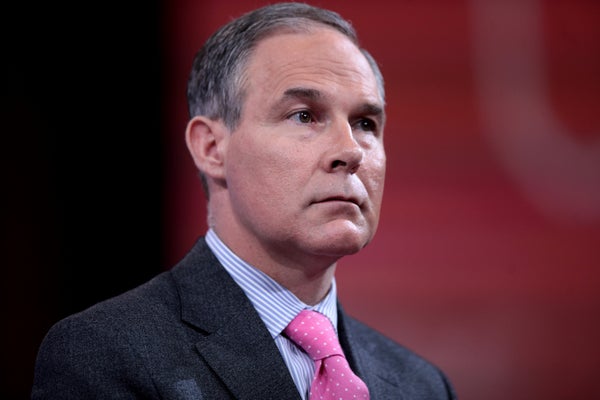
Trump's choice, Oklahoma Attorney General Scott Pruitt, has enraged environmental activists, but he fits with the Republican president-elect's promise to cut the agency back and eliminate regulation that he says is stifling oil and gas drilling.
On supporting science journalism
If you're enjoying this article, consider supporting our award-winning journalism by subscribing. By purchasing a subscription you are helping to ensure the future of impactful stories about the discoveries and ideas shaping our world today.
Pruitt became the top prosecutor for Oklahoma, which has extensive oil reserves, in 2011, and has challenged the EPA multiple times since, including in a pending lawsuit to throw out the EPA's Clean Power Plan. The plan is the centerpiece of Obama's climate change strategy and requires states to curb carbon output.
In an interview with Reuters in September, Pruitt said he sees the Clean Power Plan as a form of federal "coercion and commandeering" of energy policy and that his state should have "sovereignty to make decisions for its own markets."
Environmental groups bristled at the choice by Trump, who takes office on Jan. 20 after winning last month's election.
"Scott Pruitt running the EPA is like the fox guarding the henhouse," said Gene Karpinski, president of the League of Conservation Voters, which supported Trump's opponent in the election, Democrat Hillary Clinton.
"Time and again, he has fought to pad the profits of Big Polluters at the expense of public health."
An official for the U.S. oil industry lobbying group, the American Petroleum Institute, declined to comment on Pruitt, but said it hoped to work with Trump's administration to "help our nation continue to lead the world in the production of oil and natural gas, while also leading the world in reducing carbon emissions."
The Obama administration finalized the Clean Power Plan in 2015 as a key part of meeting U.S. obligations under the Paris Climate Agreement. Trump vowed during his campaign to pull the United States out of the Paris deal, but since the election has said he will keep an "open mind."
Trump aides praised Pruitt's record.
"Attorney General Pruitt has a strong conservative record as a state prosecutor and has demonstrated a familiarity with laws and regulations impacting a large energy resource state," one of the aides said on a transition team briefing call on Wednesday.