
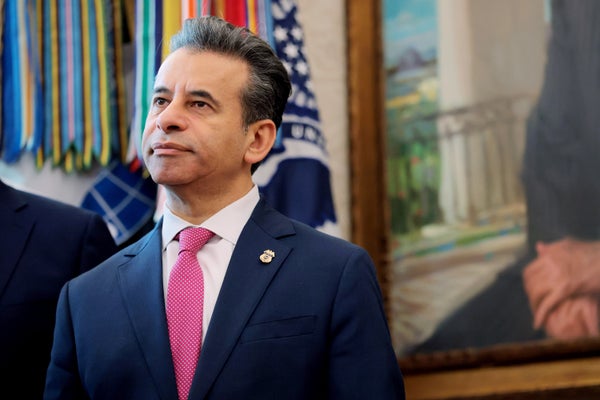
Martin “Marty” Makary, one of the most prominent supporters of the Trump administration’s Make America Healthy Again agenda, resigned as Food and Drug Administration commissioner. The reported decision came days after reports emerged that President Donald Trump had green-lit a plan to fire him.
Makary was a surgical oncologist at Johns Hopkins University before Trump tapped him for the drug regulator’s top job. His time at the helm of the FDA was marked by fierce battles over issues such as abortion and the aftermath of major layoffs at the agency. Politico, which was first to report Makary’s resignation, cited an administration source as saying Kyle Diamantas, an FDA food official, will become acting head of the agency.
Health and Human Services Secretary Robert F. Kennedy, Jr. in a statement posted to social media on Tuesday thanked Makary and said the agency's "work continues without pause."
On supporting science journalism
If you're enjoying this article, consider supporting our award-winning journalism by subscribing. By purchasing a subscription you are helping to ensure the future of impactful stories about the discoveries and ideas shaping our world today.
"The search for a new Commissioner is already underway, and we will move forward with urgency," Kennedy wrote.
Makary rose to prominence among conservative leaders for his criticism of public health leaders’ response to the COVID pandemic. Trump nominated him to lead the FDA in November 2024, and he was confirmed in March 2025.
But Makary ran afoul of multiple figures in the administration, including antiabortion advocates, when he said he could have interfered with the approval of the generic form of the abortion pill mifepristone but didn’t, the Wall Street Journal previously reported.
Trump also reportedly clashed with Makary over the latter’s reluctance to approve flavored vape products, which the agency recently approved after they were banned beginning in 2019. Makary seemingly bowed to pressure by allowing the approval; he ultimately stepped down over the decision, the New York Times reported, citing sources “familiar with the matter.”
Under Makary, the FDA has replaced panels of independent experts with people who have contrarian views and strong ties to the pharmaceutical industry.
During his tenure, Makary also oversaw the removal of a serious “black box” warning on estrogen for menopausal women, the banning of artificial food dyes and the rejection of the drug leucovorin as a treatment for autism, though it was approved to treat a rare genetic condition. He has previously mused about making many prescription medications available over the counter, with some exceptions.
Recently, the agency came under fire for failing to approve a promising melanoma treatment despite clear evidence that it was effective, calling the FDA’s drug approval process into question.
Editor’s Note (5/12/26): This is a developing story and may be updated.