
By Kate Kelland
A study of a new 3-parent IVF technique designed to reduce the risk of mothers passing hereditary diseases to their babies has found it is likely to work well and lead to normal pregnancies, British scientists said.
Britain's parliament voted last year to become the first in the world to allow the 3-parent in-vitro-fertilization (IVF)technique, which doctors say will prevent incurable inherited diseases but critics see as a step towards "designer babies".
On supporting science journalism
If you're enjoying this article, consider supporting our award-winning journalism by subscribing. By purchasing a subscription you are helping to ensure the future of impactful stories about the discoveries and ideas shaping our world today.
Having completed pre-clinical tests involving more than 500 eggs from 64 donor women, researchers from Britain's Newcastle University said the technique, called “early pronuclear transfer”, does not harm early embryonic development.
The technique also showed promise in being able to "greatly reduce" the level of faulty mitochondria in the embryo, the researchers said - confirming hopes that it is likely to reduce the risk of mothers passing on debilitating and often life-limiting mitochondrial disease to their children.
"The key message is that we have found no evidence the technique is unsafe. Embryos created by this technique have all the characteristics to lead to a pregnancy," said Doug Turnbull, director of Newcastle's Center for Mitochondrial Research, who co-led the study.
"This study using normal human eggs is a major advance in our work towards preventing transmission of mitochondrial DNA disease," he added.
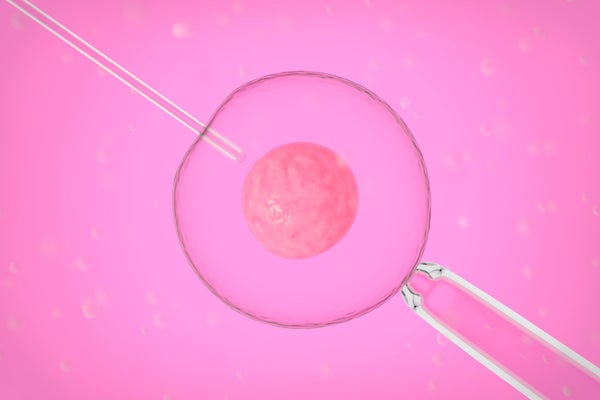
Pronuclear transfer involves intervening in the fertilization process to remove mitochondria, which act as tiny energy-generating batteries inside cells, and which, if faulty, can cause inherited fatal heart problems, liver failure, brain disorders, blindness and muscular dystrophy.
The treatment is known as "three-parent" in vitro fertilization (IVF) because the babies, born from genetically modified embryos, would have DNA from a mother, a father and from a female donor.
The results of this study, published on Wednesday in the journal Nature, will be considered by Britain's Human Fertilization and Embryology Authority, which will ultimately decide whether to issue the first license to a clinic.
That would allow couples affected by mitochondrial disease to have the choice of whether to use pronuclear transfer to try and have healthy children.