
By Reuters Staff
(Reuters) - The U.S. Food and Drug Administration on Wednesday approved Medtronic Plc's "artificial pancreas" designed to automatically deliver the right dose of insulin to patients with type 1 diabetes.
The eagerly-awaited approval offers patients "greater freedom to live their lives without having to consistently and manually monitor baseline glucose levels and administer insulin," Dr. Jeffrey Shuren, director of the FDA's medical device division said in a statement.
On supporting science journalism
If you're enjoying this article, consider supporting our award-winning journalism by subscribing. By purchasing a subscription you are helping to ensure the future of impactful stories about the discoveries and ideas shaping our world today.
The device, called the MiniMed 670G measures glucose levels every five minutes and automatically administers insulin as needed.
About 1.25 million American children and adults have type 1 diabetes.
Patients take insulin injections at various times of the day. But blood sugar can drop to dangerously low levels if too much insulin circulates in the bloodstream, requiring patients to frequently or continually monitor their insulin levels throughout the entire day.
"This device will mean peace of mind, in knowing a person will be in normal blood sugar range a great majority of the time," said Derek Rapp, Chief Executive Officer of the Juvenile Diabetes Research Foundation, which has spent $116 million on research on the artificial pancreas field.
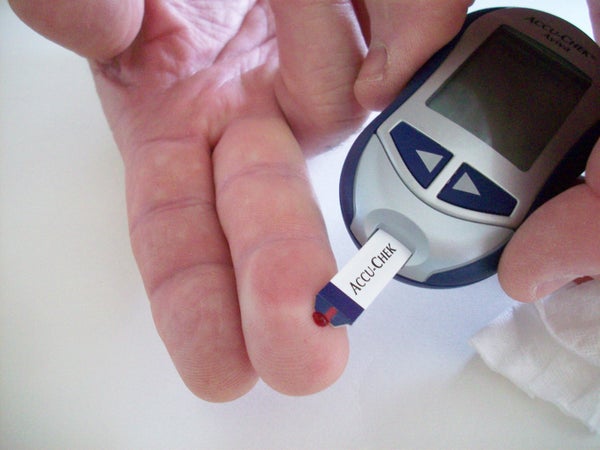
Rapp, who has a college-age son with type 1 diabetes, said as a child he had to be awakened many times each evening so his finger could be pricked for a blood sugar sample, to ensure it was in an acceptable range. If too low, the child would be given fruit juice or a snack. If too high, he would be given insulin.
"It is a major news event that a system of this kind has been approved - the first time a pump will administer insulin as a result of information it receives from a sensor," Rapp said.