
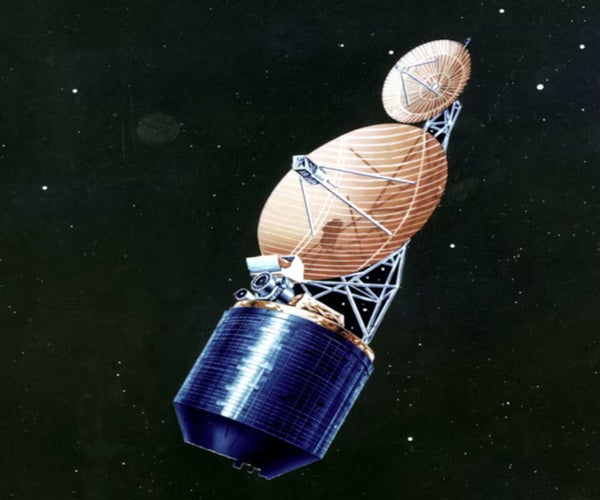
Some forty years ago, the U.S. launched a series of secret satellites, designed to spy on the country’s adversaries.
Launched between March 1971 and February 1987, those satellite missions, nicknamed “JUMPSEAT,” were declassified by the National Reconnaissance Office (NRO).
The NRO and the U.S. Airforce developed the satellites together to boost the U.S. government’s “space intelligence portfolio,” with a view to monitoring “adversarial offensive and defensive weapon system development,” according to the NRO. It’s unclear what, exactly, the JUMPSEAT satellites were monitoring.
On supporting science journalism
If you're enjoying this article, consider supporting our award-winning journalism by subscribing. By purchasing a subscription you are helping to ensure the future of impactful stories about the discoveries and ideas shaping our world today.
“The historical significance of JUMPSEAT cannot be understated,” said James Outzen, NRO director of the Center for the Study of National Reconnaissance, in the same statement. “Its orbit provided the U.S. a new vantage point for the collection of unique and critical signals intelligence from space.”
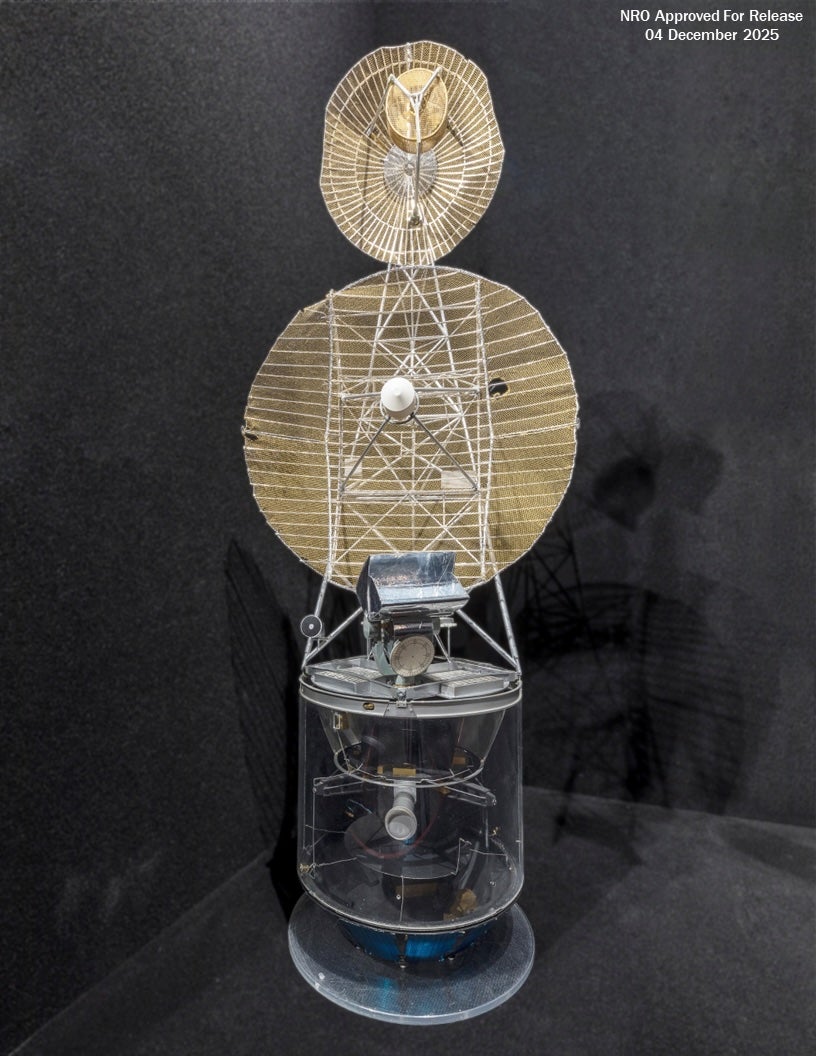
National Reconnaissance Office
The first JUMPSEAT mission launched in 1971 from a military base near Santa Barbara, California, and provided information to the U.S. Department of Defense and the National Security Agency, among other national security bodies.
According to a December memo signed by the NRO director Christopher Scolese, the JUMPSEAT satellites performed “admirably” but were decommissioned in 2006. Declassifying the missions, he said, would pose little risk to “current and future satellite systems.”
More detailed information about what the satellites did may be coming in the future. “After limited declassification,” Scolese wrote in the memo, “we will evaluate the program for a more complete programmatic declassification as time and resources permit.”