
On supporting science journalism
If you're enjoying this article, consider supporting our award-winning journalism by subscribing. By purchasing a subscription you are helping to ensure the future of impactful stories about the discoveries and ideas shaping our world today.
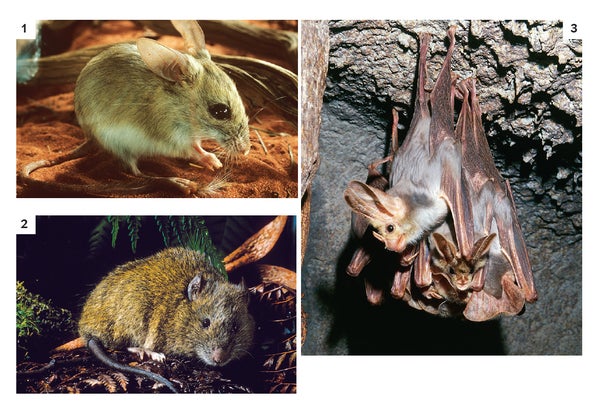
The koala is a cutie, but does it steal too much of the limelight? A new study adds quantitative detail to an ongoing debate over whether such “conservation mascots” receive publicity and funding to the detriment of animals typically deemed less attractive. Researchers at Murdoch University and Curtain University, both in Western Australia, combed through 14,248 journal papers, books and conference proceedings about 331 Down Under mammals and found an overwhelming bias against investigations of “ugly” species. In fact, 73 percent of the publications covered marsupials, such as koalas and kangaroos. In contrast, rodents and bats received 11 percent of the attention, even though they made up 45 percent of the mammals included.
Even worse, most research into these aesthetically challenged animals is at the surface level, including taxonomic descriptions that merely name the species and provide measurements, says lead author Patricia Fleming. And without knowledge of their habitats, food sources and behaviors, these creatures are harder to protect against threats that could lead to extinction. Such information gaps afflict animals well beyond Australia, too. “There are many taxa worldwide, such as amphibians, that we know are doing even worse and have even less research into them,” says Simon Watt, founder of the Ugly Animal Preservation Society. These organisms could be more ecologically important than the ones typically held up as worth saving. Bats, for example, help to control pest insects that can carry diseases or devastate crops.
Fleming describes her paper as a call to action for research on more diverse wildlife but acknowledges that funding to study or save unappealing creatures might always be lacking. “It's a small pie to divide up, and that leaves some species unfunded,” she says. In Australia, for example, most of the federal conservation budget goes toward fighting another group: “bad” invasive species. And whereas elimination of introduced European rabbits might be good for Australia's native plants, it does little to help the spinifex hopping mouse or ghost bat—let alone the koala.
