April 24, 2009
1 min read
 Add Us On GoogleAdd SciAm
Undiscovered country
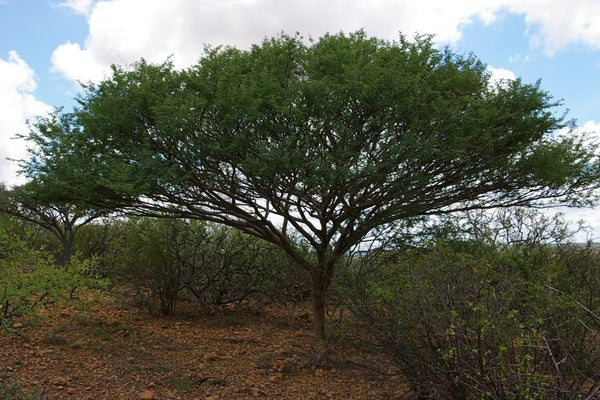
Who says there's nothing new under the sun? Botanist Mats Thulin of Uppsala University in Sweden and his colleagues have discovered a new tree that covers hillsides across some 3,000 square miles (8,000 square kilometers) on the border between Ethiopia and Somalia, a region known as Ogaden.
On supporting science journalism
If you're enjoying this article, consider supporting our award-winning journalism by subscribing. By purchasing a subscription you are helping to ensure the future of impactful stories about the discoveries and ideas shaping our world today.
Who says there's nothing new under the sun? Botanist Mats Thulin of Uppsala University in Sweden and his colleagues have discovered a new tree that covers hillsides across some 3,000 square miles (8,000 square kilometers) on the border between Ethiopia and Somalia, a region known as Ogaden. The new tree—dubbed Acacia fumosa—has delicate pink flowers but persists in a region that has been torn by strife for years. "There are certainly more new species of plant to be discovered in Ogaden and in other parts of the world, but the existence of another unknown tree dominating the vegetation over such a large area is highly unlikely," botanist David Mabberley of the Royal Botanic Gardens in Kew, England, writes in this week's Science.
It’s Time to Stand Up for Science
If you enjoyed this article, I’d like to ask for your support. Scientific American has served as an advocate for science and industry for 180 years, and right now may be the most critical moment in that two-century history.
SciAm always educates and delights me, and inspires a sense of awe for our vast, beautiful universe. I hope it does that for you, too.
If you subscribe to Scientific American, you help ensure that our coverage is centered on meaningful research and discovery; that we have the resources to report on the decisions that threaten labs across the U.S.; and that we support both budding and working scientists at a time when the value of science itself too often goes unrecognized.
In return, you get essential news, captivating podcasts, brilliant infographics, can't-miss newsletters, must-watch videos, challenging games, and the science world's best writing and reporting. You can even gift someone a subscription.
There has never been a more important time for us to stand up and show why science matters. I hope you’ll support us in that mission.