Urban Engineering in 1916: Science and Technology for the City

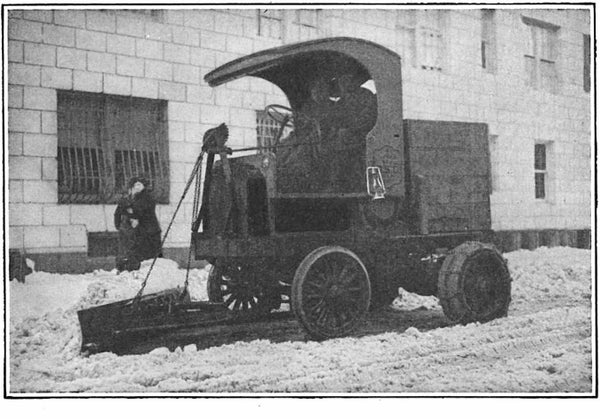
City dwellers don’t like to be at the mercy of the elements: “efforts are made to open the thoroughfares for traffic at the earliest moment so that business may not be interrupted.” Here, a snow plow is attached to a municipal motor truck.

Scientiric American, December 16, 1916

Join Our Community of Science Lovers!


On supporting science journalism

If you're enjoying this article, consider supporting our award-winning journalism by subscribing. By purchasing a subscription you are helping to ensure the future of impactful stories about the discoveries and ideas shaping our world today.


In the year these images were published, a century ago, an equal number of people in America lived in the cities and in the countryside. But by the end of the decade the urban population was larger, as farms replaced horses and laborers with machines and farmhands and their families moved to the cities to work in factories that paid more than they could earn as agricultural laborers.

From photographs, art and movies we have some idea of the extremes of city living (then and now!). In New York, for instance, we can see the squalid slums photographed by Jacob Riis, and we can peek in on the opulent life of Gilded Age industrialists (robber barons?) such as Andrew Carnegie, whose extravagent mansion is now the Cooper-Hewitt National Design Museum. But the vast majority of people living in cities with large and dense populations relied heavily on technology to enable them to live and work comfortably or even tolerably. Housing, transportation, electricity grids, water supplies, sewer systems—these made up the body of modern city life.

Our slide show here is a small peek into the vast complexity of the urban engineering that goes into helping a city survive and thrive. For a more complete look at the growth in the technology over the past 170 years, our Scientific American Archive is available for purchase here: www.scientificamerican.com/magazine/sa

Dan Schlenoff was a contributing editor at Scientific American and edited the 50, 100 and 150 Years Ago column for one seventh of the magazine's history.

More by Dan Schlenoff
Scientific American Magazine Vol 315 Issue 6This article was published with the title “Urban Engineering in 1916: Science and Technology for the City” in Scientific American Magazine Vol. 315 No. 6 ()
doi:10.1038/scientificamerican122016-4SXi3S8fHHQBo4L8m9LxZX

It’s Time to Stand Up for Science

If you enjoyed this article, I’d like to ask for your support. Scientific American has served as an advocate for science and industry for 180 years, and right now may be the most critical moment in that two-century history.

I’ve been a Scientific American subscriber since I was 12 years old, and it helped shape the way I look at the world. SciAm always educates and delights me, and inspires a sense of awe for our vast, beautiful universe. I hope it does that for you, too.

If you subscribe to Scientific American, you help ensure that our coverage is centered on meaningful research and discovery; that we have the resources to report on the decisions that threaten labs across the U.S.; and that we support both budding and working scientists at a time when the value of science itself too often goes unrecognized.

In return, you get essential news, captivating podcasts, brilliant infographics, can't-miss newsletters, must-watch videos, challenging games, and the science world's best writing and reporting. You can even gift someone a subscription.

There has never been a more important time for us to stand up and show why science matters. I hope you’ll support us in that mission.

Thank you,

David M. Ewalt, Editor in Chief, Scientific American

Subscribe