
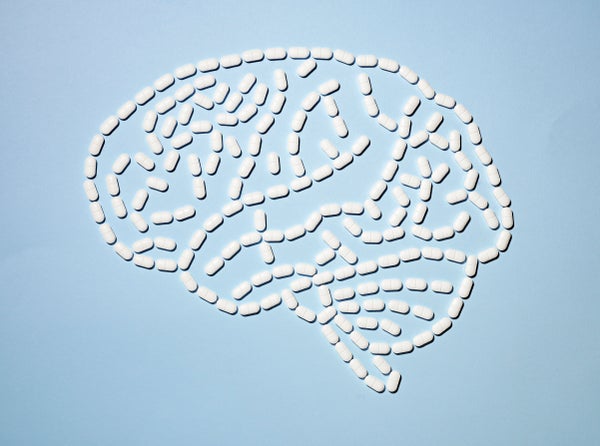
The use of drugs by people hoping to boost mental performance is rising worldwide, finds the largest ever study of the trend. In a survey of tens of thousands of people, 14 percent reported using stimulants at least once in the preceding 12 months in 2017, up from 5 percent in 2015.
The nonmedical use of substances—often dubbed smart drugs—to increase memory or concentration is known as pharmacological cognitive enhancement (PCE), and it rose in all 15 nations included in the survey. The study looked at prescription medications such as Adderall and Ritalin—prescribed medically to treat attention deficit hyperactivity disorder (ADHD)—as well as the sleep-disorder medication modafinil and illegal stimulants such as cocaine.
The work, published in the International Journal of Drug Policy in June, is based on the Global Drug Survey—an annual, anonymous online questionnaire about drug use worldwide. The survey had 79,640 respondents in 2015 and 29,758 in 2017.
On supporting science journalism
If you're enjoying this article, consider supporting our award-winning journalism by subscribing. By purchasing a subscription you are helping to ensure the future of impactful stories about the discoveries and ideas shaping our world today.
US respondents reported the highest rate of use: in 2017, nearly 30 percent said they had used drugs for PCE at least once in the preceding 12 months, up from 20 percent in 2015.
But the largest increases were in Europe: use in France rose from 3 percent in 2015 to 16 percent in 2017; and from 5 percent to 23 percent in the United Kingdom. An informal reader survey by Nature in 2008 found that one in five respondents had used drugs to boost concentration or memory.
The latest analysis is impressive in its size, says Barbara Sahakian, a neuroscientist at the University of Cambridge, UK, who was not involved in the work. There is an increasing "lifestyle use" of cognitive-enhancing drugs by healthy people, which raises ethical concerns, she says.
Cultural factors, the prevalence of ADHD diagnoses and availability all influence which drugs are used for PCE and the rate of use, says Larissa Maier, a psychologist at the University of California, San Francisco, who led the study.
In the United States, where ADHD diagnoses are high and medication is a common treatment, 22 percent of respondents said they had used amphetamine-combination drugs such as Adderall for PCE. Those drugs are not approved in the European Union, where methylphenidate—sold under various trade names, including Ritalin—is more commonly used.
The study suggests that the spread of US-style practices in ADHD treatment is driving the trend and making drugs more available: countries with higher rates of ADHD diagnoses, such as the United States, Canada and Australia, have higher rates of nonmedical prescription-drug use for cognitive enhancement.
“The increased diagnoses of ADHD and their prescription drug use is creating a substantial population of young pharmacologically medicated persons whose underlying problems may very likely be located in their social world,” says Steven Rose, a neuroscientist at the Open University in Milton Keynes, UK.
Nearly half (48 percent) of people said they obtained the drugs through friends; 10 percent bought them from a dealer or over the Internet; 6 percent obtained them from a family member; and 4 percent said that they had their own prescriptions.
Debate continues over whether the nonmedical use of prescription drugs boosts brain performance. Data suggest that some people benefit from certain drugs in specific situations—for example, surgeons using modafinil—but larger population-wide studies report lesser gains, and conflicting results.
Maier notes that respondents to the Global Drug Survey are more likely than the general population to be interested in drug use, which could bias results. But she says that similar rates of nonmedical use of smart drugs are seen in studies of the general population, suggesting that the findings are robust.
This article is reproduced with permission and was first published on July 5, 2018.