
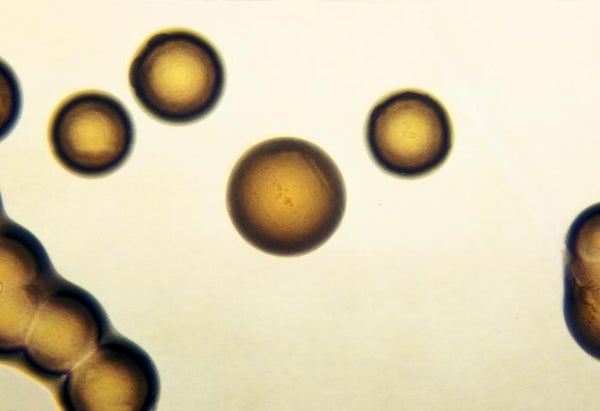
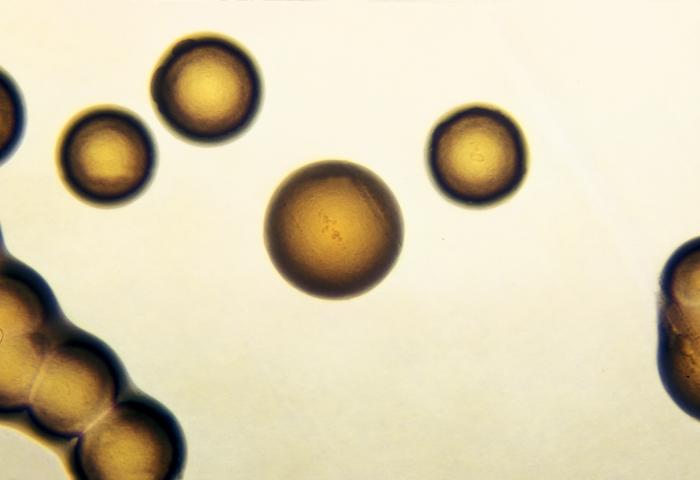
Finally, the world might be catching a break when it comes to drug-resistant gonorrhea.
A new study suggests that a vaccine that protects against a strain of meningitis may also ward off the sexually transmitted infection.
The research, conducted in New Zealand, found that the gonorrhea rate among teens and young adults there who had received a meningitis B vaccine during an emergency campaign in the early 2000s was significantly lower than the rate seen in people of the same age who weren’t vaccinated.
On supporting science journalism
If you're enjoying this article, consider supporting our award-winning journalism by subscribing. By purchasing a subscription you are helping to ensure the future of impactful stories about the discoveries and ideas shaping our world today.
Researchers in Quebec say they saw the same phenomenon after a meningitis outbreak there, and previously published data from Cuba and Norway also hint of the vaccine’s unexpected benefit.
“It’s quite probably real,” said Helen Petousis-Harris, lead author of the New Zealand article and head of immunization research and vaccinology at the University of Auckland.
The findings are observational. Clinical trials will need to be conducted to see if the effect researchers have observed is actually due to the meningococcal B vaccine. But confirmation would be good news for the prevention and control of gonorrhea.
The last remaining drugs to cure this sexually transmitted infection are showing signs they may only have a few more years of usefulness left.
“While it is still very early days, these findings represent a positive step in the search for a vaccine against this common and distressing disease that is increasingly resistant to antibiotic treatment,” said Robin Gaitens, a spokeswoman for GSK, which owns the product that contains this meningitis component.
Why would a vaccine designed to protect against a strain of bacteria that causes meningitis also prevent gonorrhea infection? Some biology is useful here.
Meningitis is a condition — inflammation of the membranes that surround the brain and the spinal cord — that can be triggered by some viruses and several types of bacteria.
One of the latter is Neisseria meningitidis, sometimes known as meningococcal disease. It is the only form of bacterial meningitis that triggers epidemics.
Despite the fact that gonorrhea and meningitis are quite different from one another, the bacteria that cause Neisseria gonorrhoeae and Neisseria meningitidis are actually related.
Meningococcal disease is rare but very dangerous. It can kill, and quickly. People who survive the infection can suffer permanent brain damage or may lose one or several limbs.
Because of the severity of the consequences, health officials often mount emergency vaccination campaigns in response to outbreaks of Neisseria meningitidis.
There are vaccines for several Neisseria meningitidis strains, but designing a vaccine to protect against the B strain was a particularly difficult nut to crack. As a consequence, the vaccine component that was made to protect against B targets a different part of the bacterium, Petousis-Harris said.
That may explain why the B vaccine appears to offer some protection against Neisseria gonorrhea. Meningococcal vaccines that protect against the other strains do not seem to have the same effect.
“A lot of these vaccines have been used widely globally,” Petousis-Harris said. “And what’s happened with gonorrhea? Nothing. Gonorrhea carries on its merry little way.”
New Zealand had a very bad meningococcal outbreak in the early 2000s caused by the B strain. A special vaccine that only protected against that strain was made; it was used between 2004 and 2008.
Petousis-Harris and her colleagues looked later to see if gonorrhea rates had changed after that meningococcal vaccination campaign. They found people who were vaccinated were 31 percent less likely to be infected with gonorrhea than those who hadn’t received the meningococcal B vaccine.
The study, published Monday in the Lancet, was funded by GSK and Auckland Uniservices, the commercialization arm of the University of Auckland.
The single-component vaccine used by New Zealand is no longer made. But the same component is one of several in the Bexsero vaccine, which was used in Quebec when the government decided to vaccinate against meningococcal B disease in a part of the province with a high relative rate of cases a few years ago.
Dr. Jean Longtin, head of the province’s public health laboratory, said he and some colleagues decided to look at whether the vaccination campaign was having an impact on gonorrhea rates in that area after reading about an early observation from Norway.
“In Quebec we saw the exact same effect as New Zealand,” said Longtin, who said his group is still analyzing its findings. “Gonorrhea rates have been going down in the vaccine group whereas in the non-vaccine group it’s following the rest of the province.”
It is not clear how long the protection — if it’s real — will actually last. But even a few years of protection could help significantly reduce the spread of gonorrhea, experts argue.
“Mathematical modeling has shown that even a vaccine of moderate efficacy and duration could have a substantial effect on the transmission and prevalence of gonorrhea, if coverage in the population is high and protection lasts during the highest risk period,” Kate Seib, of Australia’s Institute for Glycomics, wrote in a commentary that accompanied the study.
Republished with permission from STAT. This article originally appeared on July 10, 2017