
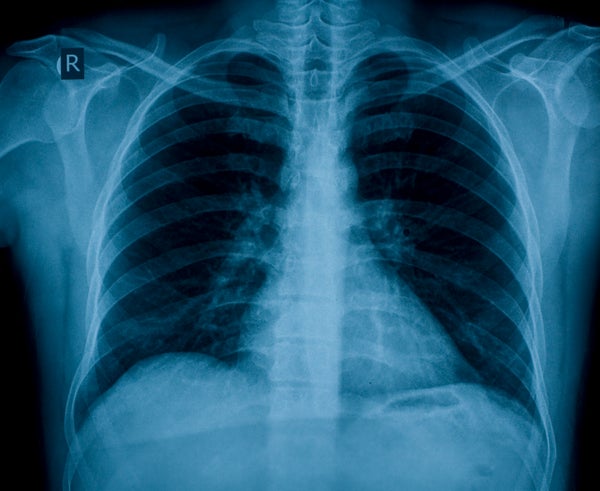
The airways and lungs of some patients with a vaping-related illness appeared damaged in ways similar to those exposed to chemical spills or harmful gases, researchers reported Wednesday.
The study did not provide any clues as to the kind of chemicals that might be causing the condition, but the authors said signs of damage were consistent.
“What all these appeared to represent was some sort of toxic chemical fume injury, or chemical burn if you will,” said Dr. Brandon Larsen, a pathologist at Mayo Clinic Arizona and senior author of the paper, which was published in the New England Journal of Medicine.
On supporting science journalism
If you're enjoying this article, consider supporting our award-winning journalism by subscribing. By purchasing a subscription you are helping to ensure the future of impactful stories about the discoveries and ideas shaping our world today.
The report—based on biopsies—did not find any evidence to back some earlier suggestions that lipids, or fats, inhaled through vaping might be a possible contributor to the condition. The findings could offer a potential new approach to identifying new cases.
“We wanted to understand the spectrum of changes that can be seen so that we can help provide diagnostic criteria for pathologists in the laboratory who are seeing these biopsies and for clinicians who are sending biopsies to the lab,” Larsen said.
Health officials have said that many people suffering from the condition have been vaping cartridges acquired from informal sources like dealers or friends. It’s possible that a contaminant or additive could be the culprit, though experts are still not certain that’s the case.
More than 800 confirmed and probable cases of the injury have occurred in the United States, according to federal data released last week, with at least a dozen deaths linked to the illness.
For the new report, Larsen and colleagues examined biopsies from 17 patients suspected of having or confirmed to have vaping-associated lung injury, two of whom died from the condition. About 70% of the patients said they had vaped marijuana, echoing survey data released last week by health authorities that found 87% of a group of patients had vaped THC products.
In all of the 17 cases, the researchers found signs of pneumonitis—inflammation of the lungs—and damage to the airway and lung tissue, suggesting, they wrote, the condition might be caused by “one or more inhaled toxic substances.”
What they did not find was evidence of lipoid pneumonia, which occurs when fats enter the lungs. Last month, a team from North Carolina reported diagnosing five patients with vaping-related illnesses with lipoid pneumonia and speculated that the cause might be patients breathing in aerosolized oils from e-cigarettes. But the Mayo Clinic researchers found that none of the cases they looked at supported such a premise, which they wrote “calls into question” searching out lipids as a diagnostic marker.
Previous research had already raised doubts about inhaled oils as the cause of the injuries. Researchers from Utah last month reported finding macrophages—a type of immune cell—filled with lipids in the cases they reviewed, but that other symptoms were not consistent with lipoid pneumonia.
The new research backs that up, said Dr. Sean Callahan, a University of Utah pulmonologist, who was part of the Utah team that published their report last month. While so-called lipid-laden macrophages are seen in cases of lipoid pneumonia, they can also form because of general inflammation and damage to the lungs. When that happens, broken down cells release lipids, which can make their way into macrophages.
Larsen, of Mayo Clinic Arizona, said the team found some signs of lipids in macrophages, though not large amounts.
Researchers said that discovering how to diagnose vaping-related injuries can help point to the roots of the problem and, more broadly, help tackle the emerging public health crisis.
“We still don’t know 100% what’s causing this, but if you’re saying it’s because a bunch of people are inhaling oil, then young people might say, ‘Oh we just shouldn’t inhale oil,’” Callahan said. “We need to have a good message around this.”
Republished with permission from STAT. This article originally appeared on October 2, 2019