Viral Learning Curve
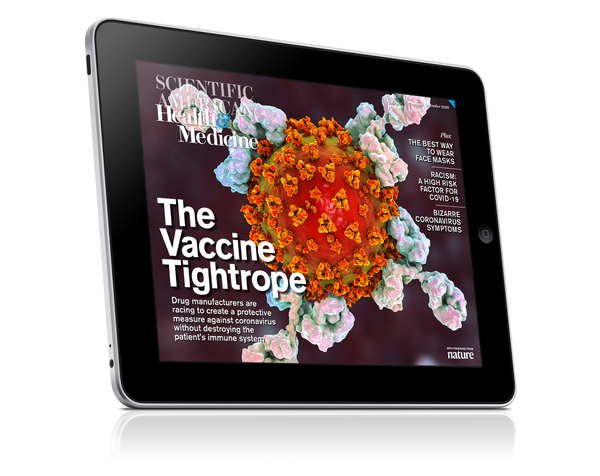
Drug manufacturers are racing to create a protective measure against coronavirus without destroying the patient’s immune system
By Andrea Gawrylewski
As the public and policy makers anxiously await the arrival of a preventive treatment for SARS-CoV-2, the virus that causes COVID-19, researchers are racing to apply what they know about how coronaviruses stimulate the human immune system to create a barrier to prevent them from invading cells. The catch is the virus is tricky. It can co-opt the very molecules sent to disable it and launch a destructive immune reaction in the patient (see “COVID-19 Vaccine Developers Search for Antibodies That ‘First Do No Harm’”). Reporter Esther Landhuis makes the astute observation that never before have the intricacies of immune function been a more central topic of conversation in everyday life. For those wishing they’d paid more attention in high school biology, there is plenty in this issue to help you catch up.
We on the editorial team worried that our primer on how to properly wear a face mask would be old news by the time it published. But virus cases are surging across the U.S., and new mask-wearing ordinances went into effect only recently in states such as South Carolina and California. Check out graphics designer Katie Peek’s excellent illustrated guide in “How to Use Masks during the Coronavirus Pandemic.” And epidemiologist Camara Phyllis Jones explains the socioeconomic conditions that make it more likely that people of color in America are more likely to die from the novel coronavirus (see “Why Racism, Not Race, Is a Risk Factor for Dying of COVID-19”). Mask up, and be well.
Subscribe to Support Independent Journalism
Great science journalism requires human expertise, time, effort and creativity. And it costs money. That’s why I and the journalists here at Scientific American hope you’ll join our community.
When you subscribe, you are supporting staff and freelance journalists who are passionate about telling science stories that are true, important and compelling. Our editors and reporters are often experts in their fields, which means they understand the nuances of big discoveries and can untangle the breakthroughs from the hype. With a subscription, you are also supporting rigorous fact-checking to ensure the words we publish are precise and accurate. And you’re supporting original illustrations, graphics and photos that bring you closer to an advanced laboratory, an ice sheet in Antarctica or a space mission in orbit. You’re helping us craft other types of high-quality journalism as well: Our newsletters are carefully written, edited and curated by staffers you have or will come to know and love. Our Science Quickly podcast is based on original reporting, collaboration with editors and scientists and exacting production.
Subscriptions keep this engine running so we can continue to deliver thoughtful, rigorous and independent science journalism to you. In an era of viral misinformation, this work is crucial. If you value what we do, I hope you’ll consider joining us as a subscriber