
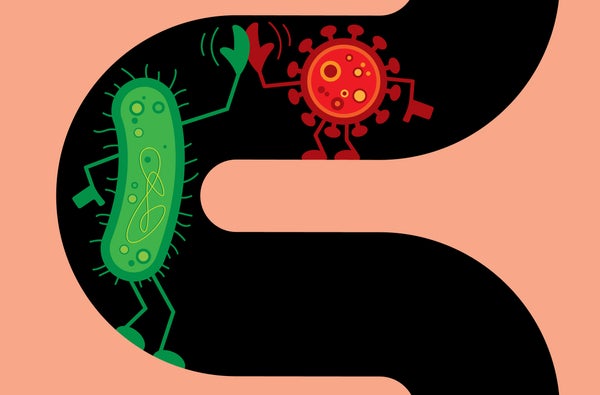
Viruses have an understandably bad reputation. But deep in our digestive system, a lot of them are quietly working to keep us healthy. This “gut virome” is an important part of the overall microbiome—the vast collection of microbes that play a crucial role in our digestion, immunity and overall health.
“The bacterial component of the microbiome is well known,” says Tao Zuo, a microbiologist at Sun Yat-sen University in China. “But the virome we don’t really know much about.”
This is partly because viruses are so tiny; the gut virome makes up just 0.1 percent of the total microbial mass, Zuo explains. And viruses mutate quickly, making their genetic material harder to isolate for study. To get a better understanding, Zuo and his colleagues pulled together a wealth of research data to catalog how the gut virome changes with age, diet and the environment.
On supporting science journalism
If you're enjoying this article, consider supporting our award-winning journalism by subscribing. By purchasing a subscription you are helping to ensure the future of impactful stories about the discoveries and ideas shaping our world today.
Their review, published in Precision Clinical Medicine, particularly focuses on bacteriophages—viruses that infect bacteria and make up more than 90 percent of the virome. These viruses sometimes benefit us by killing harmful gut bacteria. But they can also strengthen pathogens—“for example, if a bacteriophage carries a gene that offers resistance to antibiotics,” says virologist Jelle Matthijnssens, who specializes in virome research at Belgium’s Catholic University of Leuven (KU Leuven) and was not involved in the review.
The study’s authors show how an individual’s virome is constantly developing based on genetics and the environment. At birth, infants’ bacteriophages often vastly outnumber their microbiome’s bacteria, but this begins to change with exposure to the outside world and as the gut develops. During adolescence, bacterial populations change further because of hormone shifts and accrued exposure to other microbes. By adulthood, healthy people host a delicate and mutually beneficial equilibrium of bacteriophages and bacteria.
Certain bacteriophages that help to maintain this balance are extremely reactive to environmental factors such as diet and air quality, and they also respond to their host’s inflammation levels, immune signaling, stress hormones, and more. Factors such as exposure to certain drugs and poor diet can trigger an imbalance that reduces virome diversity. This shift in turn has been associated with disorders such as inflammatory bowel disease. In elderly people, an aging immune system and increased metabolic stress can further throw this system out of whack and increase viral numbers, potentially contributing to age-related diseases.
Understanding these aging and environmental effects may someday contribute to clinical applications such as targeting viruses to unwanted bacteria through phage therapy, the scientists say—but much more research is needed.
“A key challenge is distinguishing causality from correlation,” says Evelien Adriaenssens, a microbiologist at the Quadram Institute in England, who was not involved in the new study. “Each individual’s virome is unique, so we cannot make sweeping statements about the health of an individual by looking at their virome alone.”