The Year 1916 in the Great War

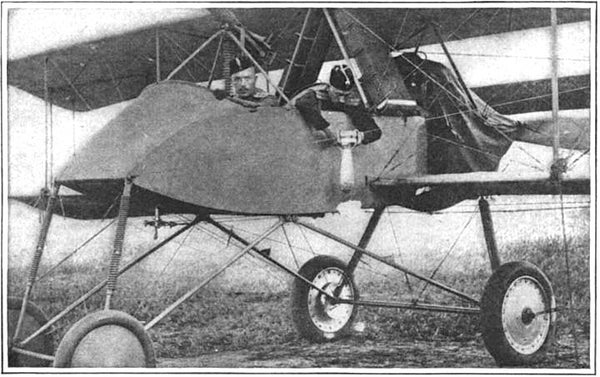
Bombers: This two-seater French designed ground-attack Voisin aircraft in the service of the Imperial Russian air forces is being readied for a bombing raid in early 1916 (or perhaps late 1915).

Scientific American, March 4, 1916

Join Our Community of Science Lovers!

After two years of war the massive number of casualties was no longer a secret to any thinking civilian or soldier, and few still expected an easy or quick resolution to the conflict. Governments had become desperate for manpower, armaments and military supplies of all kinds. Significant portions of the population, as well as industrial and agricultural production, had been shifted over to war work.

In a search for victory, science and technology was pressed into service, and 1916 saw the first use of tanks in warfare as well as widely expanded use of chemical weapons, flamethrowers, and the airplane in a wide variety of roles on land and sea. Transport and communication still relied on horses and pigeons and signal flags even as motor vehicles, telegraph, telephone became the new norm. Radio, used in shipping, was finally becoming more portable and being installed in airplanes.

If there is any theme that emerges from this turbulent age, it is that necessity was very much the mother of invention. Those people who were tasked with achieving victory in a ghastly situation were forced to became adept at improvising, inventing and muddling through as best as the crisis allowed them to.


On supporting science journalism

If you're enjoying this article, consider supporting our award-winning journalism by subscribing. By purchasing a subscription you are helping to ensure the future of impactful stories about the discoveries and ideas shaping our world today.


You can see some of the desperation and inventiveness as you pore through these slides and you can also delve into the history of science in the service of war from 1845 to now at scientificamerican.com/magazine/sa

Dan Schlenoff was a contributing editor at Scientific American and edited the 50, 100 and 150 Years Ago column for one seventh of the magazine's history.

More by Dan Schlenoff
Scientific American Magazine Vol 315 Issue 4This article was published with the title “The Year 1916 in the Great War” in Scientific American Magazine Vol. 315 No. 4 ()
doi:10.1038/scientificamerican102016-5M1dP7b15HeNg8MhXVn5ZI

It’s Time to Stand Up for Science

If you enjoyed this article, I’d like to ask for your support. Scientific American has served as an advocate for science and industry for 180 years, and right now may be the most critical moment in that two-century history.

I’ve been a Scientific American subscriber since I was 12 years old, and it helped shape the way I look at the world. SciAm always educates and delights me, and inspires a sense of awe for our vast, beautiful universe. I hope it does that for you, too.

If you subscribe to Scientific American, you help ensure that our coverage is centered on meaningful research and discovery; that we have the resources to report on the decisions that threaten labs across the U.S.; and that we support both budding and working scientists at a time when the value of science itself too often goes unrecognized.

In return, you get essential news, captivating podcasts, brilliant infographics, can't-miss newsletters, must-watch videos, challenging games, and the science world's best writing and reporting. You can even gift someone a subscription.

There has never been a more important time for us to stand up and show why science matters. I hope you’ll support us in that mission.

Thank you,

David M. Ewalt, Editor in Chief, Scientific American

Subscribe